1
/
of
2
Begin With Plants
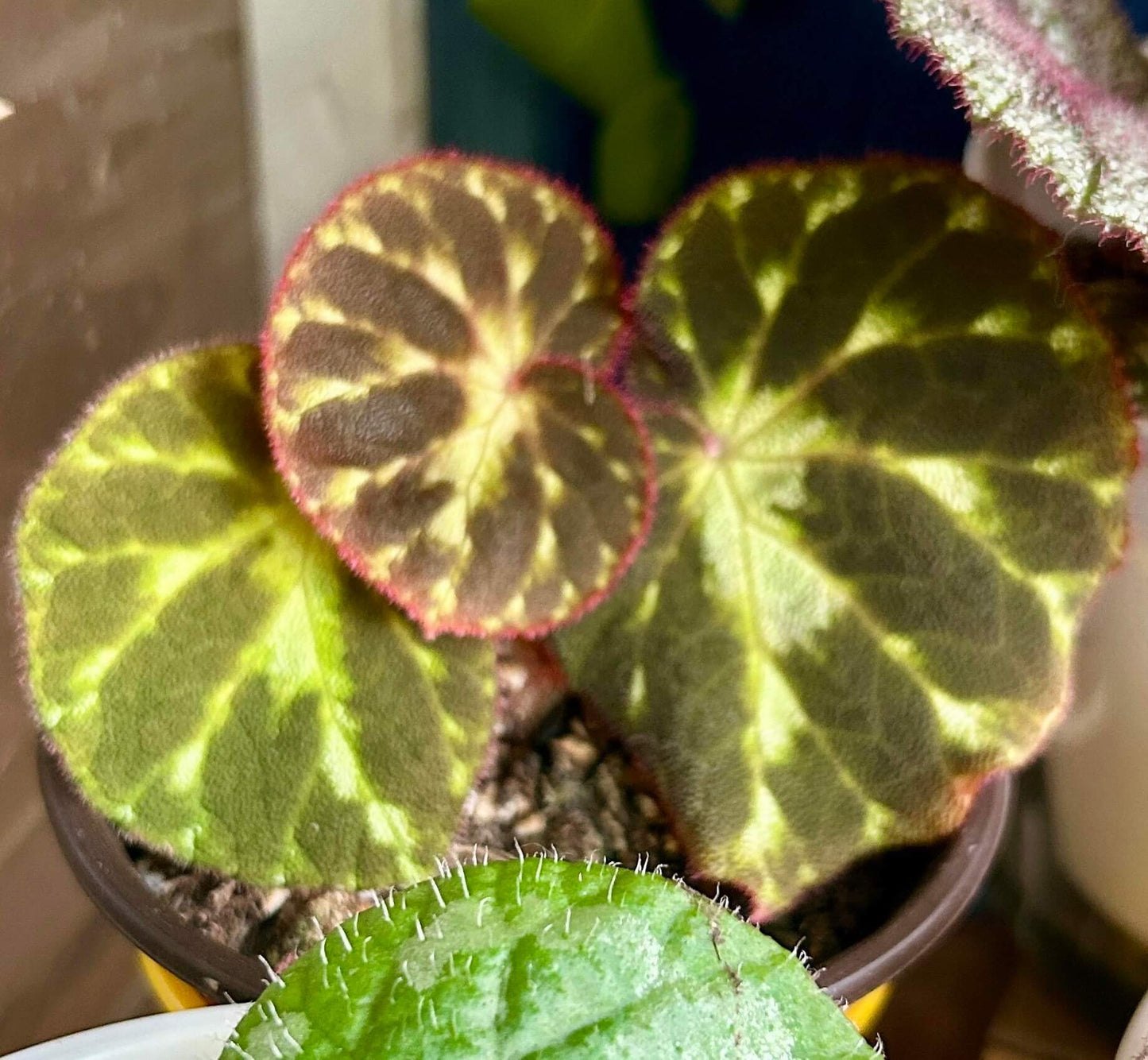
Begonia sp. Velvet Lark
Begonia sp. Velvet Lark
Regular price
$79.99 USD
Regular price
Sale price
$79.99 USD
Unit price
/
per
Shipping calculated at checkout.
Couldn't load pickup availability
Begonia sp. Velvet Lark is native to Vietnam and features striking green foliage marked with irregular dark black blotches across the leaf surface. The contrast between the fresh green base and deep dark patterns gives the plant a dramatic, almost painted appearance. Under suitable lighting, the markings appear even more pronounced, enhancing its wild and mysterious character. The overall form is elegant yet slightly bird-like, reflecting the “Lark” inspiration in its name.
Care Tips:
-
Light
- Bright, indirect light is ideal
- Avoid direct sunlight (can scorch leaves and fade markings)
- Too little light reduces contrast and pattern intensity
-
Watering
- Keep soil lightly moist, not soggy
- Water when top 1–2 cm (0.5–1 inch) of soil feels dry
- Reduce watering in cooler months
- Avoid overwatering (risk of root rot)
-
Humidity
- Prefers high humidity (60%–80%)
- Use a humidifier, pebble tray, or plant grouping
- Low humidity may cause crispy leaf edges
-
Soil
- Well-draining, airy mix is essential
- Recommended mix: peat or coco coir + perlite + orchid bark
- Avoid heavy, compact soil
-
Temperature
- Ideal range: 18–26°C (65–79°F)
- Do not expose to temperatures below 15°C (59°F)
- Keep away from cold drafts and sudden temperature changes
-
Fertilizing
- Feed every 2–4 weeks during growing season (spring–summer)
- Use diluted balanced liquid fertilizer
- Reduce or stop fertilizing in fall and winter
-
Pruning & Maintenance
- Remove yellow, old, or damaged leaves regularly
- Improves airflow and plant appearance
- Encourages compact, healthy growth
-
Common Issues
- Yellow leaves → overwatering or poor drainage
- Faded patterns → insufficient light
- Brown leaf edges → low humidity
- Stem rot → excess moisture or poor soil aeration
Share