Begin With Plants
Brassavola perrinii
Brassavola perrinii
Couldn't load pickup availability
Brassavola perrinii is native to South America and typically grows as an epiphyte in montane habitats at elevations of approximately 1,980 m to 2,580 m, making it cooler‑growing compared to many other Brassavola species. The plant features pendulous, terete stems with a single narrow, whiplike leaf at each growth apex.
Features:
-
Plant form: Small to medium orchid; slender, pendulous terete leaves give it a “rat‑tail” look ideal for hanging baskets or mounting.
-
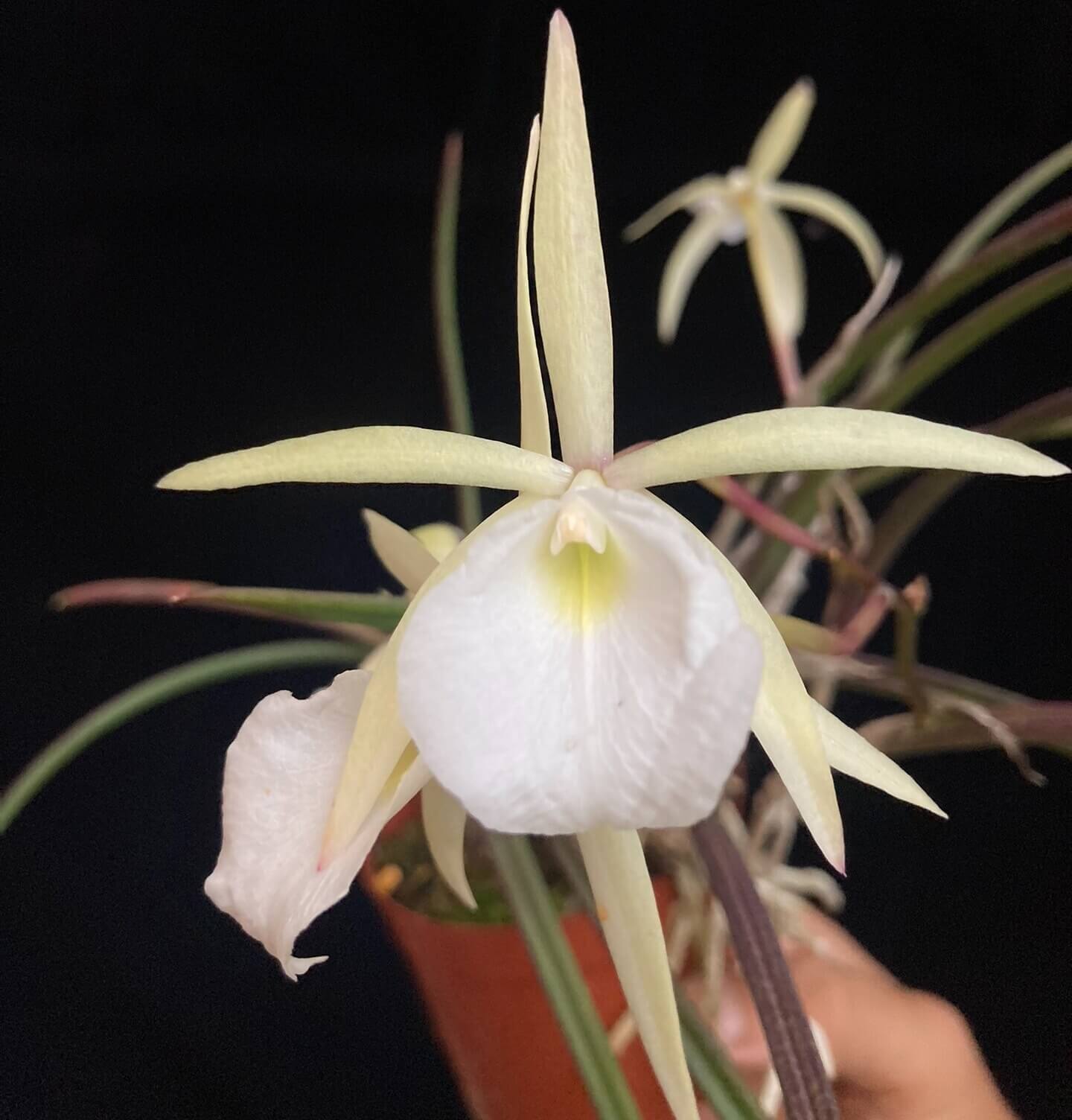
Inflorescence: Short raceme with 3–6 flowers.
-
Flowers:
• ~6.5–7.5 cm across, with light green sepals/petals and a contrasting broad white lip.
• Often fragrant at night (sometimes described as gardenia‑like). -
Bloom season: Typically spring–summer in cultivation and in the wild.
Care Tips:
-
Light: Provide bright light with strong indirect sun; this species tolerates high light and even some direct sun in cooler parts of the day. Bright light helps promote flowering.
-
Temperature: Prefers intermediate to warm conditions. In cultivation it does well with warmer daytime temperatures and some drop at night, though it can also tolerate cooler nights when air movement is good.
-
Watering: During active growth (spring–summer) keep the roots moist but never waterlogged — allow the medium to dry slightly between waterings. Reduce watering a bit in cooler months.
-
Humidity & Airflow: High humidity (around 60–80%) combined with good air circulation helps this orchid thrive and prevents rot.
-
Growing Medium: Grow mounted on cork/bark slabs or in a very open, coarse orchid mix (large bark) that ensures excellent drainage and airflow. Mounted culture mimics its natural epiphytic habitat and often yields better growth.
-
Fertilizer: Apply a balanced orchid fertilizer diluted to about ¼–½ strength during active growth to support healthy foliage and more frequent flowering.
-
Flowering: This species blooms in spring to summer, producing 3–6 fragrant flowers on a short raceme; the scent is often described as strong and gardenia‑like at night.
Share