Begin With Plants
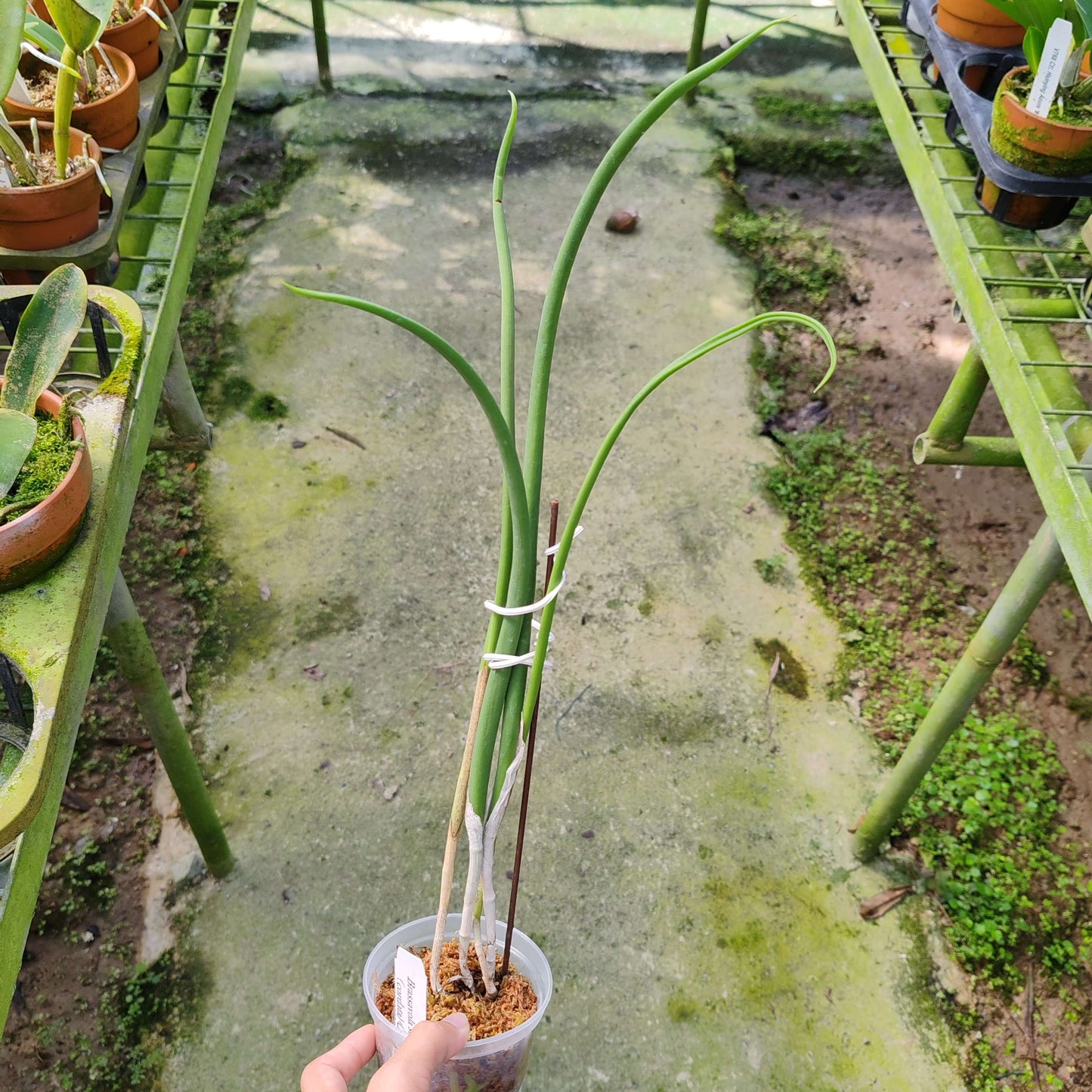
Brassavola subulifolia (syn. Brassavola cordata)
Brassavola subulifolia (syn. Brassavola cordata)
Couldn't load pickup availability
Brassavola subulifolia (syn. Brassavola cordata) is a species of epiphytic orchid in the Brassavola genus, commonly called the Heart‑Lipped Brassavola. It is endemic to Jamaica and grows on trees in warm, lowland habitats.
Features:
-
Growth habit: Epiphytic orchid with cylindrical (terete), somewhat stout stems and single terete leaf per growth.
-
Flowers:
• Produced in dense clusters (often 6–20 flowers) on inflorescences.
• Color: Lime green sepals/petals with a contrasting broad white lip.
• Fragrance: Sweet citrus or tropical scent emitted at night to attract moth pollinators (hence the common “lady‑of‑the‑night” orchid trait shared with other Brassavola species).
• Often blooms more than once per year under good conditions.
Care Tips:
-
Light: Provide bright light with some direct sun (especially morning or late afternoon). Bright indirect light helps promote flowering, and dark green leaves often indicate too little light.
-
Temperature: Enjoys warm to intermediate temperatures. Typical Brassavola range is about 18–29 °C (65–85 °F) with slightly cooler nights, which can help encourage blooms.
-
Watering: Water thoroughly when the medium begins to dry; do not let roots sit soggy. On mounts or in baskets, water more frequently so roots don’t stay dry too long. Reduce watering moderately in cooler months.
-
Humidity & Airflow: Moderate to high humidity (roughly 50–70%) with good airflow keeps plants healthy and prevents rot.
-
Growing Medium: Best grown mounted on bark/cork/tree fern or in a very free‑draining orchid mix (large bark or similar), as roots need plenty of air.
-
Fertilizer: Apply a diluted balanced orchid fertilizer during the growing season to support growth and blooms. Many growers use a fertilizer at about ¼–½ strength regularly.
-
Repotting: If potted, repot every couple of years when the medium breaks down. Mounted plants generally stay longer without repotting but may need remounting as they grow.
Share