Begin With Plants
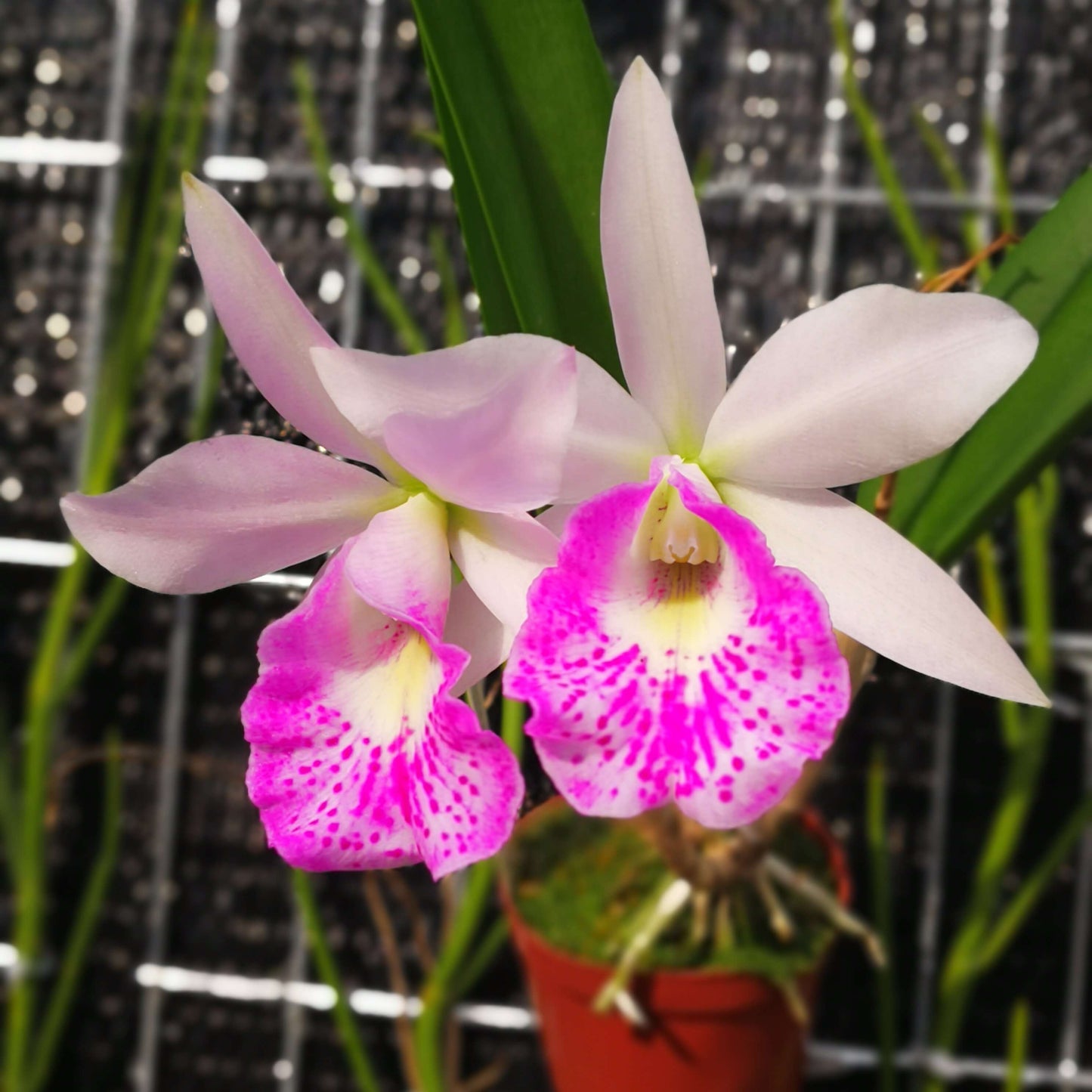
Brassocattleya (Mem. Robert Strait × nodosa)
Brassocattleya (Mem. Robert Strait × nodosa)
Couldn't load pickup availability
Care Tips:
-
Light:
-
Bright, indirect light is ideal.
-
Morning sun or filtered south/east light works best.
-
Healthy leaves should be light to medium green; dark green indicates insufficient light.
-
-
Temperature:
-
Day: 22–30°C (72–86°F)
-
Night: 16–20°C (61–68°F)
-
Slight night temperature drops encourage flower spike formation.
-
-
Watering:
-
Keep the medium evenly moist but well-drained.
-
During active growth (spring–summer): water every 3–5 days depending on conditions.
-
Reduce watering during autumn–winter but do not allow the medium to dry completely.
-
-
Humidity:
-
Maintain 50–70% relative humidity.
-
Use a humidifier or humidity trays if air is dry.
-
Ensure good air circulation to prevent fungal issues.
-
-
Fertilizer:
-
During active growth: fertilize every 1–2 weeks with a diluted orchid fertilizer (¼–½ strength).
-
Reduce feeding during flowering and winter rest periods.
-
-
Potting Medium:
-
Use a well-draining epiphytic orchid mix (medium bark, perlite, and some sphagnum moss).
-
Repot every 2–3 years, ideally at the start of new root growth.
-
-
Mounting Option:
-
Can be mounted on tree fern slabs or bark, reflecting its epiphytic growth habit.
-
Mounted plants require more frequent watering.
-
-
Flowering:
-
Usually blooms once a year; flower color and pattern may vary slightly depending on the clone.
-
Adequate light, slight day–night temperature variation, and proper fertilization promote consistent blooming.
-
-
Pests & Problems:
-
Watch for scale, spider mites, and aphids.
-
Treat early with orchid-safe insecticides or gentle cleaning.
-
Avoid stagnant water to prevent root rot.
-
-
Extra Tips:
-
Brassavola heritage may contribute subtle fragrance, especially at night.
-
Air circulation is crucial for healthy growth and preventing fungal infections.
-
The hybrid is generally vigorous and adaptable, making it suitable for both potting and mounting cultures.
-
Share