Begin With Plants
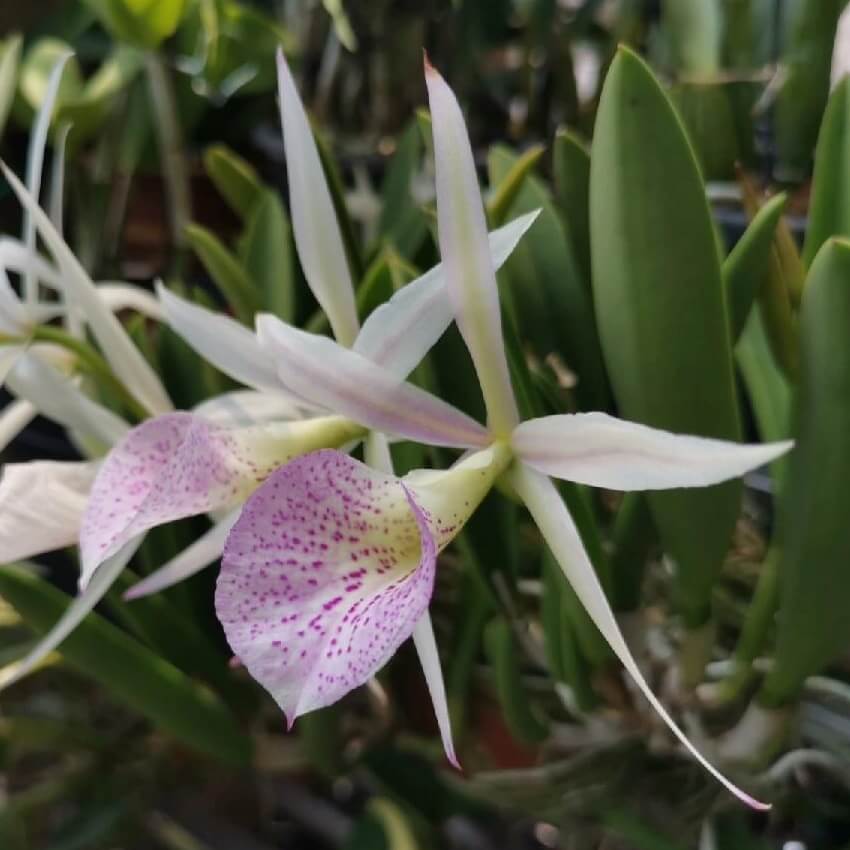
Brassocattleya Nanipuakea ‘Dogashima’
Brassocattleya Nanipuakea ‘Dogashima’
Couldn't load pickup availability
Brassocattleya Nanipuakea ‘Dogashima’ (abbreviated Bc. Nanipuakea ‘Dogashima’) is an intergeneric orchid hybrid in the Brassocattleya group—a blend of Brassavola and Cattleya genetics that often produces showy, often fragrant flowers.
Parentage & Background:
-
Seed Parent: Brassavola nodosa
-
Pollen Parent: Cattleya Hardyana (whose lineage includes Cattleya dowiana and Cattleya warscewiczii)
The strong Brassavola nodosa influence tends to give Bc. Nanipuakea distinctive narrower, star‑shaped flowers and potentially pleasant evening fragrance, while the Cattleya side contributes to substance and color variation in the blooms.
Care Tips:
-
Light: Provide bright, indirect light. East or west‑facing windows with morning/afternoon gentle sun are ideal. Too little light leads to dark green leaves and poor blooming.
-
Watering: Water thoroughly, then let the potting medium dry slightly between waterings. Overwatering and soggy media can cause root rot.
-
Humidity: Maintain moderate to high humidity (50–70%); use humidity trays, grouping plants, or a humidifier if your air is dry.
-
Temperature: Grow in warm conditions (~65–85°F / 18–29°C) with a slight nighttime drop; avoid cold drafts and extreme cold below ~55°F (13°C).
-
Potting Medium & Drainage: Use a well‑draining orchid mix (e.g., bark, perlite, charcoal) to promote airflow around roots. Repot every 1–2 years as the medium breaks down.
-
Fertilization: During active growth (spring to early fall), use a balanced orchid fertilizer diluted to about half strength every 2–4 weeks. Reduce feeding in cooler/dormant periods.
-
Airflow: Ensure good air circulation around the plant to prevent fungal and bacterial issues, especially when humidity is high.
-
After Bloom & Care: Allow a slight rest period after blooming with reduced watering and feeding. Adjust light to encourage the next bloom cycle.
Share