Begin With Plants
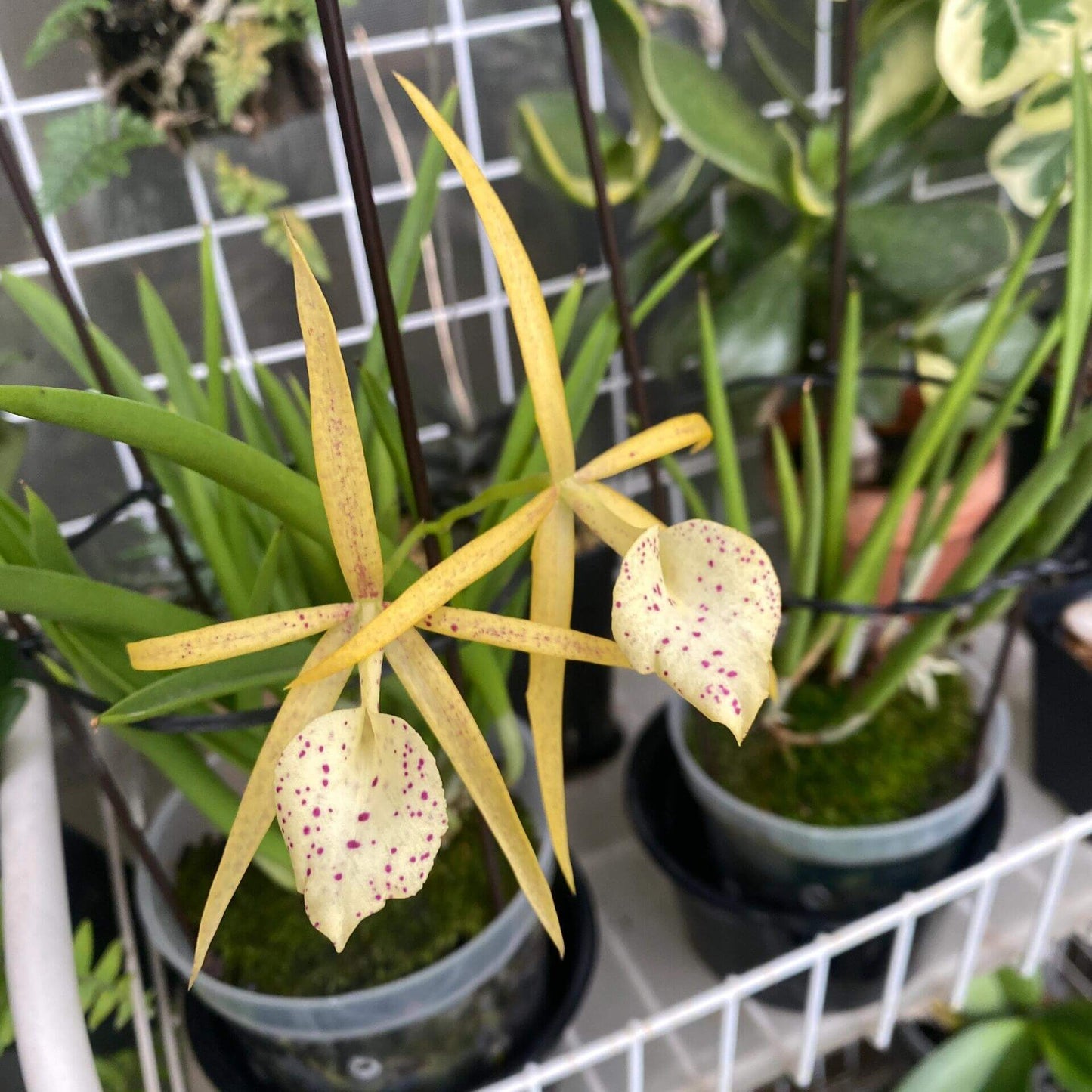
Brassocattleya Yellow Bird
Brassocattleya Yellow Bird
Couldn't load pickup availability
Brassocattleya Yellow Bird (abbreviated Bc. Yellow Bird) is a classic intergeneric orchid hybrid between Brassavola nodosa and Brassocattleya Richard Mueller, originating in 1990 and widely appreciated for its bright star-shaped blooms and attractive form. It typically produces vibrant yellow flowers—sometimes with red speckles on the lip—that may start with a blush or peach tone and deepen to golden yellow as they mature. The blooms are often fragrant, especially in the evening, reflecting the fragrant heritage of B. nodosa, and the plant itself is known for being a reliable and relatively easy-growing member of the Cattleya alliance that can flower multiple times a year under good conditions.
Care Tips:
-
Light: Provide bright, high light—these plants thrive with medium to high light levels. Some growers acclimate them to morning or late afternoon direct sun, but avoid harsh midday sun.
-
Watering: Water thoroughly when the potting medium is nearly dry, then allow it to dry between waterings. Good drainage is essential to prevent root rot.
-
Humidity: Maintain moderate to high humidity, ideally around 50–70%. Grouping plants, using humidity trays, or a humidifier helps in dry indoor air.
-
Temperature: Prefers intermediate to warm temperatures (about 65–85°F / 18–29°C). Protect from cold drafts or temperatures below ~55°F (13°C).
-
Potting Medium: Use a well-draining orchid mix (chunky bark, perlite, charcoal). Brassocattleyas like good airflow around roots. Repot every 1–2 years as the medium breaks down.
-
Fertilization: Feed with a balanced orchid fertilizer (e.g., 20-20-20) diluted to about ½ strength during active growth (spring/summer) every 2–4 weeks; reduce feeding in winter.
-
Airflow: Good air circulation helps prevent fungal and bacterial issues, especially in high humidity environments.
-
After Bloom: Once finished flowering, maintain consistent care and light to encourage new growth and the next bloom cycle. Frequent blooming is possible under good conditions.
Share