Begin With Plants
Bulbophyllum leandrianum
Bulbophyllum leandrianum
Couldn't load pickup availability
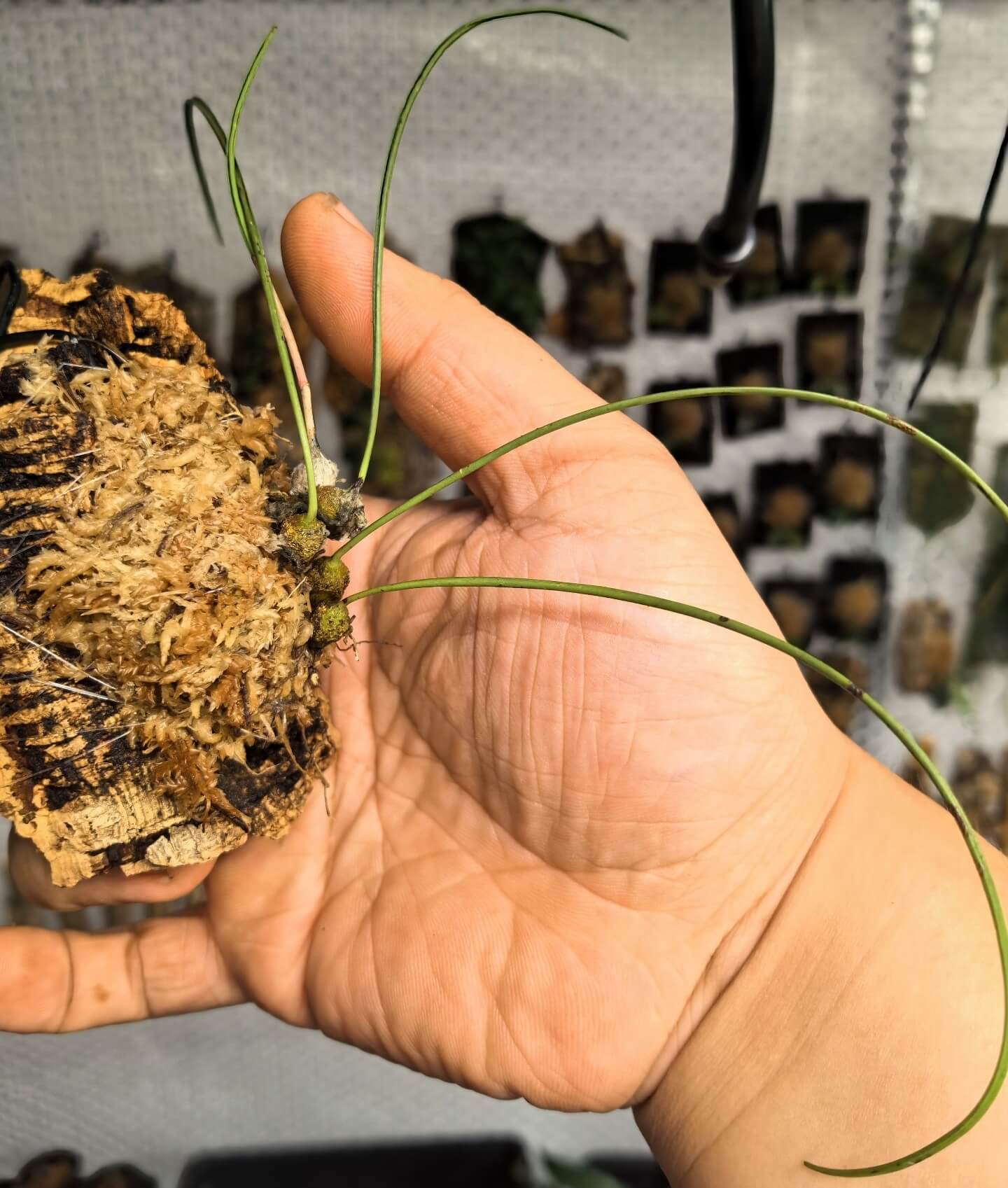
Bulbophyllum leandrianum, described by H. Perrier in 1937, is a small, warm-to-cool growing epiphytic species native to the humid, evergreen montane forests of east-central Madagascar, where it typically occurs at elevations above 900 meters.
Features:
Habitat & Growth Form
-
Grows as a small-sized epiphytic orchid, residing in humid, evergreen montane forests at elevations above 900 meters.
-
Features small, globose pseudobulbs, each producing one apical, nearly semi-cylindrical leaf that may be slightly canaliculate (grooved) near the base.
Floral characteristics
-
Bloom timing: Late spring to early summer.
-
Inflorescence: Thin, red, up to 25 cm long, bearing several small (≈ 3 mm) flowers, often loosely arranged, with 3–4 adpressed sheaths along the scape.
Care Tips:
-
Light: Prefers bright, indirect light—equivalent to shaded forest understory conditions. East or north-facing windows are ideal; avoid direct sun.
-
Temperature: Warm to intermediate, typically between 60–80 °F (15–27 °C); some species tolerate down to 50 °F (10 °C).
-
Humidity & Airflow: Requires high humidity (60–90%) and excellent air circulation to avoid root rot.
-
Watering: Keep the medium consistently moist but not waterlogged. Mounted specimens may need watering up to twice a day; for potted forms, water every 3–7 days depending on your setup.
-
Potting Medium: Use a superbly draining mix—orchid bark, sphagnum moss, perlite, charcoal—or mount on cork or tree fern slabs to replicate its epiphytic habitat.
-
Fertilizer: Feed with half-strength balanced orchid fertilizer every 2–4 weeks during active growth. Reduce or skip during rest periods.
-
Pest & Disease Prevention: Regularly inspect for pests (aphids, mites) and fungal issues. Good ventilation and avoiding stagnant moisture helps prevent disease.
Share