Begin With Plants
Bulbophyllum speciosum
Bulbophyllum speciosum
Couldn't load pickup availability
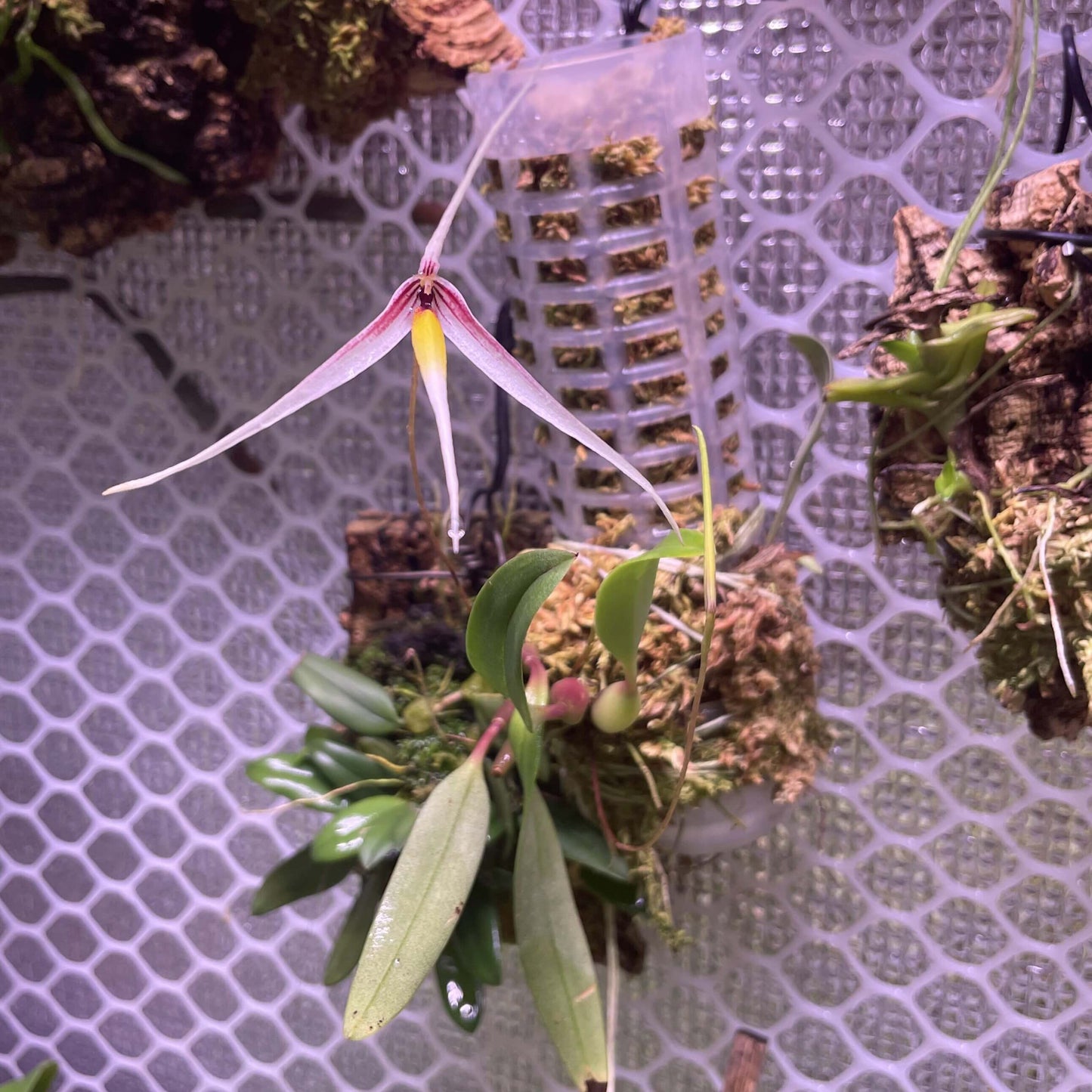
Bulbophyllum speciosum Schltr., described in 1912, is an accepted orchid species endemic to New Guinea, where it thrives as an epiphyte in wet tropical forests.
Features:
-
Growth Habit
This species has a creeping rhizome with widely spaced conical-cylindrical pseudobulbs (~2–3 cm tall and ~0.4–0.6 cm diameter), each topped with a single elliptic leaf measuring around 10–16 cm long. -
Flowers
Blooms appear in late spring (typically) on erect, filiform inflorescences ~8–10 cm long, each bearing a single showy flower about 7–8 cm in diameter. The sepals are white or pale with dense dark purple striping; the lip is golden yellow with a contrasting white apex.
Care Tips:
Light
Provide medium to bright, indirect light—bright filtered light is ideal. Avoid harsh direct sun that might scorch foliage.
Temperature
Maintain warm to intermediate conditions:
-
Day: 21–27 °C (70–80 °F)
-
Night drop: 6–8 °C cooler to encourage blooming
This species tolerates a broader range—approximately 7–35 °C—but cannot withstand frost.
Humidity & Airflow
High humidity of 70–80% is essential, paired with strong air circulation to prevent fungal issues.
Watering
-
Keep the growing medium constantly moist, allowing a slight drying between waterings—roots should never wilt or stay soggy.
-
Mounted plants benefit from daily misting to sustain moisture.
Growing Medium & Mounting
-
A well-draining, moisture-retentive medium—such as sphagnum moss, fine bark, or tree fern fiber—is ideal.
-
Given its creeping habit, B. speciosum is well-suited for mounting on cork or treefern or growing in shallow pots or baskets.
Fertilizer
Feed during active growth with a balanced orchid fertilizer at ¼–½ strength weekly or monthly, depending on growth rate. Flush pots occasionally to avoid salt buildup.
Repotting
Repot or remount only when necessary—typically every 2–3 years or when new growth begins—to minimize stress on delicate roots.
Share