Begin With Plants
Cattleya amethystoglossa ‘Crownfox’ AM/AOS
Cattleya amethystoglossa ‘Crownfox’ AM/AOS
Couldn't load pickup availability
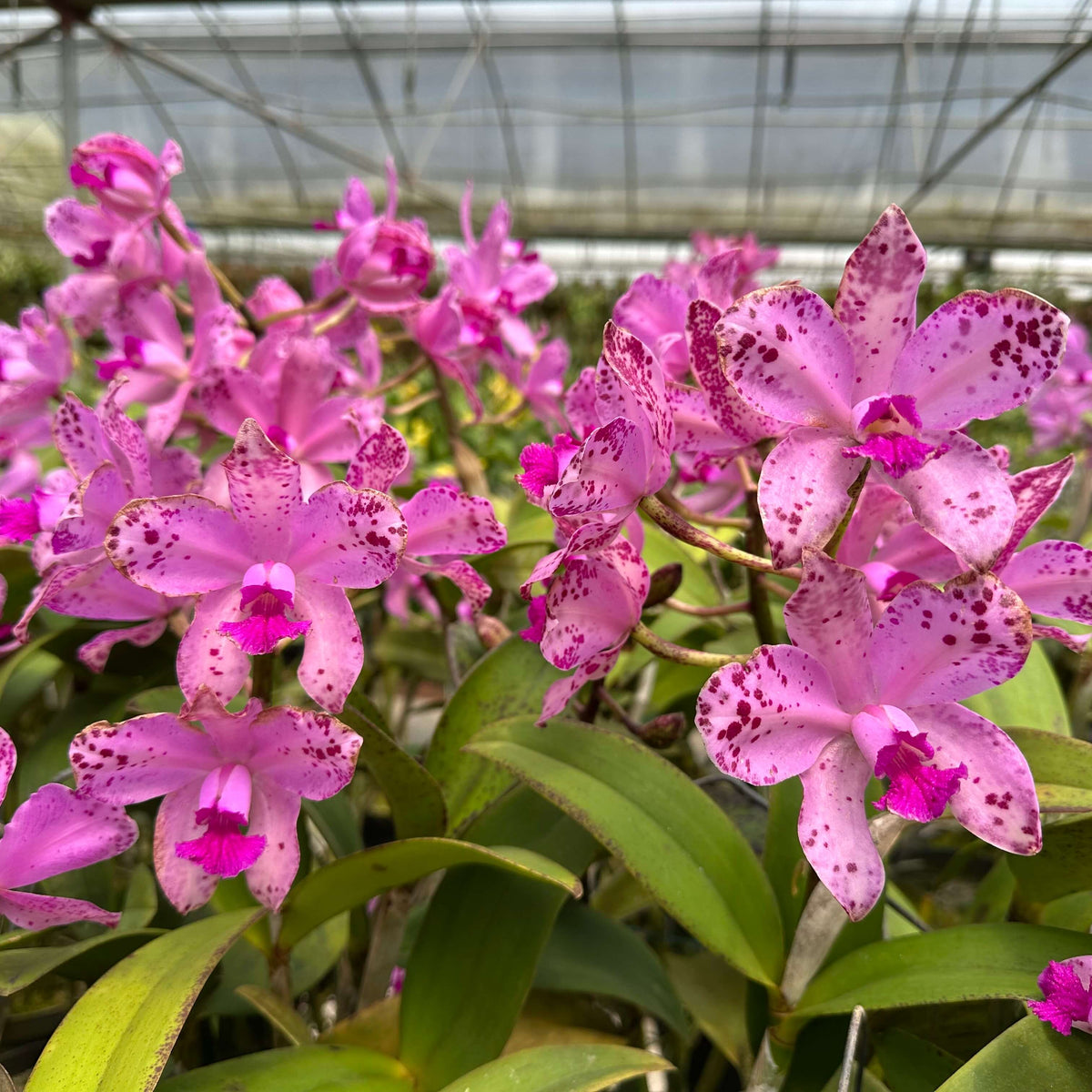
Cattleya amethystoglossa ‘Crownfox’ AM/AOS is an awarded selection of Cattleya amethystoglossa, a bifoliate orchid species native to Brazil. The American Orchid Society (AOS) records ‘Crownfox’ as an Award of Merit (AM), scoring 82 points, awarded in Florida in March 2001. A separate selection, ‘Crownfox III’, also received an AM/AOS award.
The species is known for its tall, cylindrical pseudobulbs, two leathery leaves and upright flower clusters. Its fleshy flowers are typically rose-pink to lavender, with numerous amethyst-purple spots across the sepals and petals and a deeply colored, three-lobed lip. A mature inflorescence may carry approximately 5–20 flowers.
Care Tips:
-
Light: Provide bright light, with some gentle morning or late-afternoon sunlight. This species generally needs stronger light than many shade-growing orchids.
-
Watering: Water thoroughly during active growth, allowing the medium to approach dryness between waterings.
-
Growing Medium: Use a very open, well-draining orchid mix with medium-grade bark, charcoal and perlite, or mount the plant where roots can dry quickly.
-
Humidity: Maintain approximately 50–70% humidity with good air circulation.
-
Temperature: Intermediate to warm conditions are suitable, approximately 20–32°C (68–90°F) during the day, with cooler nights.
-
Fertilizing: Apply a diluted balanced orchid fertilizer during active growth and flush the medium periodically.
-
Airflow: Provide strong, gentle airflow, especially in warm and humid conditions.
-
Repotting: Repot when new roots begin to emerge or the growing medium starts to break down.
-
Flowering: Bright light, healthy mature pseudobulbs and consistent watering during active growth support flowering. Reduce watering as growth slows, without leaving the plant severely dehydrated.
Share