Begin With Plants
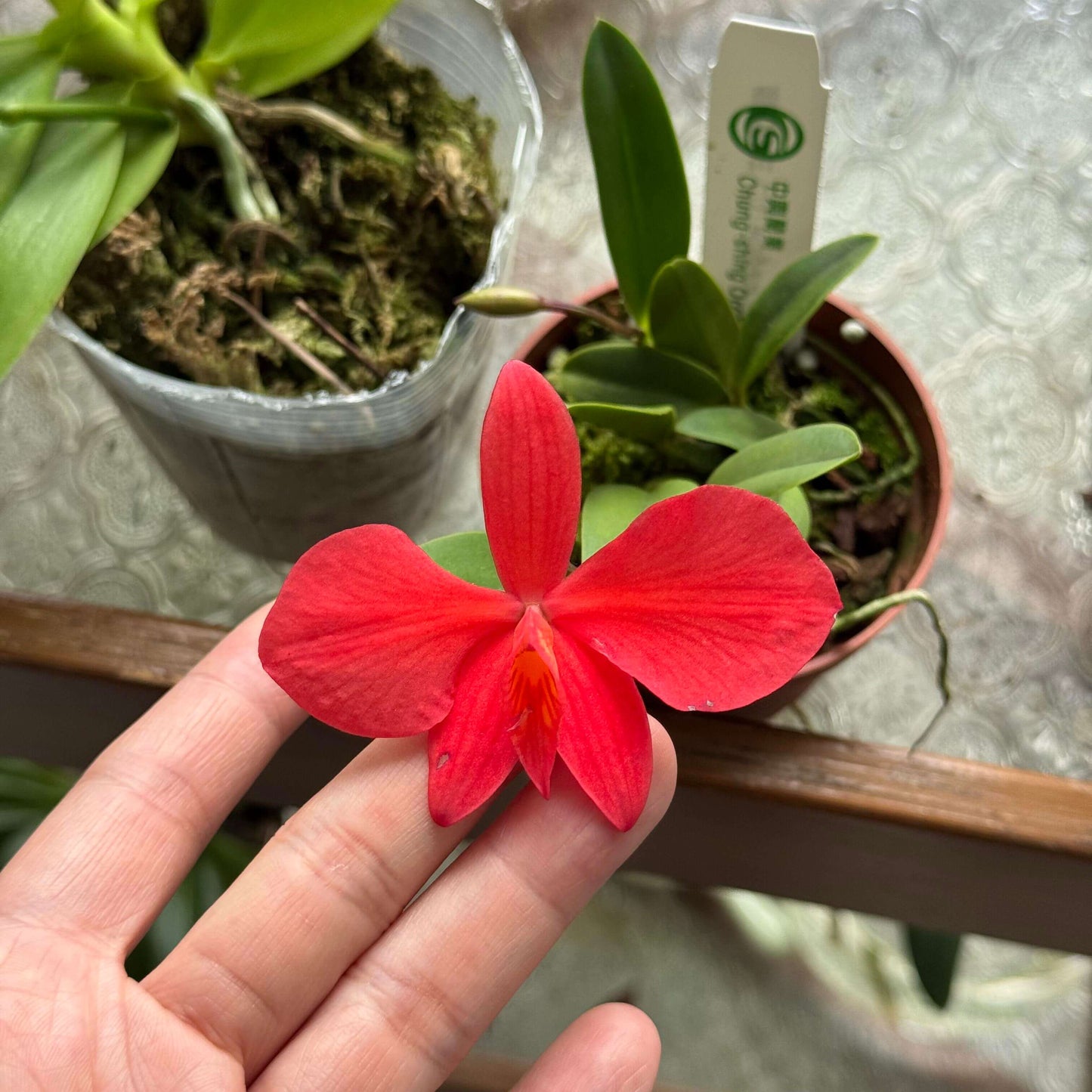
Cattleya brevipedunculata (syn. Sophronitis brevipedunculata)
Cattleya brevipedunculata (syn. Sophronitis brevipedunculata)
Couldn't load pickup availability
Cattleya brevipedunculata (syn. Sophronitis brevipedunculata) is a miniature epiphytic (or sometimes lithophytic) orchid species in the genus Cattleya. It is native to southeastern Brazil (especially Minas Gerais and possibly Espírito Santo) and grows in cool mountain habitats on tree trunks or in rock crevices at elevations of about 1,220–2,000 m, where it receives moisture from nightly cloud and dew.
Care Tips:
-
Light:
-
Provide bright light with some shaded protection from harsh midday sun. Cattleyas generally need more light than phalaenopsis to bloom well.
-
-
Temperature:
-
Prefers cool to intermediate conditions — mimic its mountain forest origin with cooler nights and moderate daytime warmth.
-
Typical ranges: 15–25 °C (59–77 °F) for general growth, slightly warmer or cooler depending on your local environment.
-
-
Watering:
-
Water thoroughly but allow the potting medium to dry slightly between waterings to avoid root rot.
-
In cooler or less active growth times, reduce watering frequency.
-
-
Humidity & Airflow:
-
Maintain moderate humidity and good air circulation around the plant to support healthy roots and foliage.
-
-
Growing Medium:
-
Use a well‑draining orchid mix (e.g., coarse bark, perlite, charcoal) to mimic epiphytic conditions.
-
Mounting on bark/cork slabs with moss is also possible if humidity is high.
-
-
Blooming:
-
Flowers typically appear late winter to spring on short inflorescences with 1–3 blooms.
-
-
Fertilizing:
-
During active growth, use a balanced orchid fertilizer diluted to half strength every 2–3 weeks; reduce or stop during dormant periods. (General Cattleya practice)
-
-
Repotting:
-
Repot when the medium breaks down or the plant has outgrown its container — ideally when new roots start to grow. (General Cattleya practice)
-
Share