Begin With Plants
Habenaria medioflexa
Habenaria medioflexa
Couldn't load pickup availability
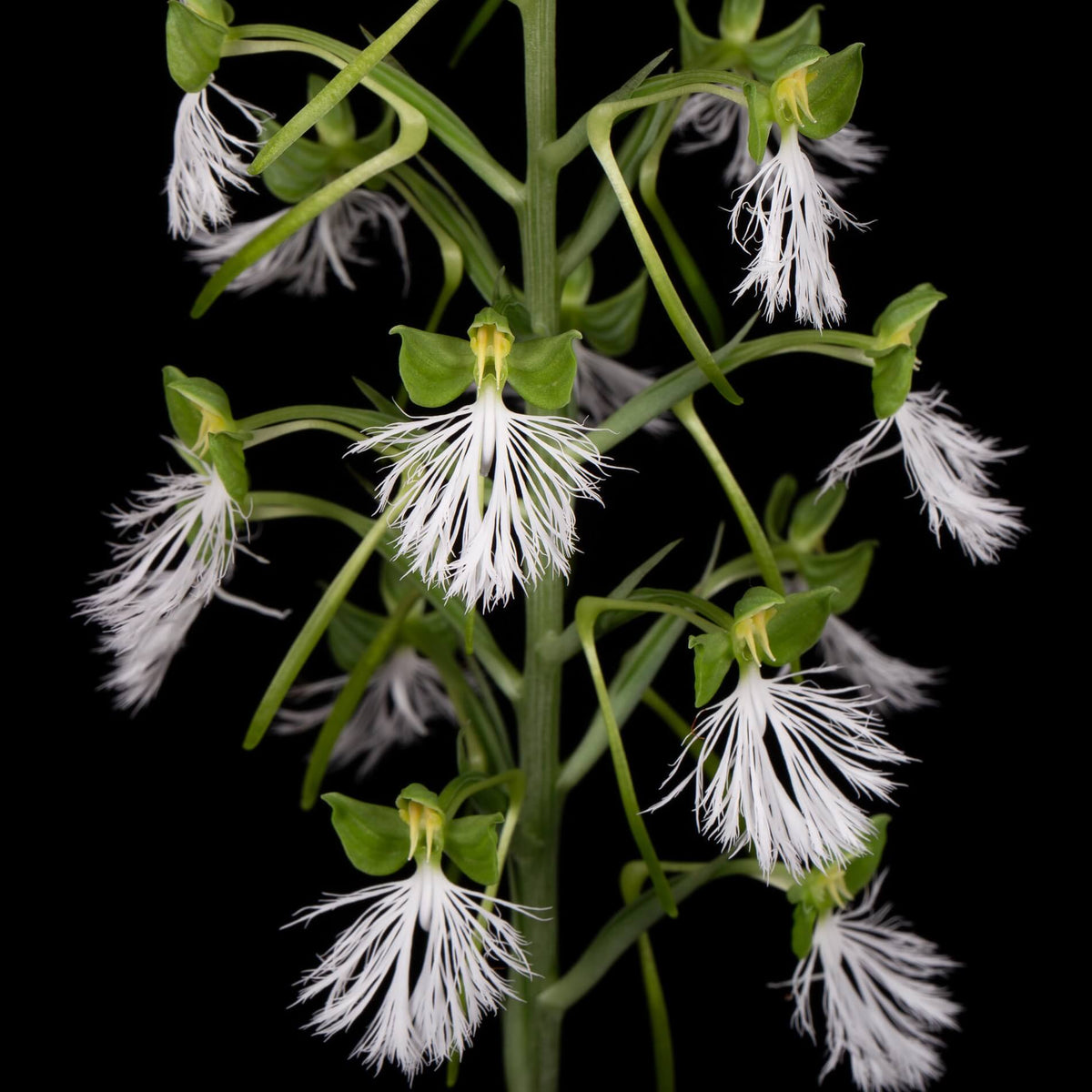
Habenaria medioflexa Turrill is a tuberous terrestrial orchid in the section Medusaeformes. It is native from southern Yunnan in China through mainland Southeast Asia to Peninsular Malaysia, including Thailand, Vietnam, Laos, Cambodia and Myanmar. It grows in wet tropical habitats and is generally associated with forest environments.
The plant reaches about 30–48 cm tall and develops fleshy, oblong tubers with 4–5 main leaves along the erect stem. Its upright inflorescence carries approximately 9–18 flowers. The flowers are particularly interesting: the sepals are yellowish green, while the petals and deeply divided lip are white. The lateral lobes of the lip are divided into numerous fine, thread-like segments, giving the flowers a delicate, fringed appearance. The greenish spur can reach approximately 3.5 cm long and bends forward near the middle.
Care Tips:
- Light: Provide bright light to partial sun during active growth. Habenaria can tolerate relatively high light levels, and brighter conditions generally encourage stronger flowering.
- Watering: Keep the growing medium consistently moist during active growth. Avoid allowing it to dry completely, as insufficient water can result in weak, accordion-like growth.
- Growing Medium: Use a loose, well-draining terrestrial orchid mix that retains moisture without becoming compacted. Fine bark, sphagnum and perlite can work well.
- Humidity: Moderate to high humidity is beneficial, but good air circulation is particularly important because the thin leaves can be susceptible to fungal and bacterial problems.
- Temperature: This is a warm-growing species. During active growth, approximately 18–29°C (65–85°F) during the day and above 10°C (50°F) at night is appropriate.
- Fertilizing: Use a diluted balanced fertilizer during active growth. Avoid excessive fertilizer and salt buildup; rainwater or low-mineral water is preferable where possible.
- Airflow: Provide gentle, continuous airflow, particularly in warm and humid conditions.
- Dormancy: After flowering and as the foliage naturally dies back, gradually reduce watering. During dormancy, watering should be greatly reduced or withheld while the tuber remains dormant.
- Repotting: Repot when the plant is dormant or beginning a new growth cycle. Handle the tuber carefully because the underground storage organ is essential for the following season's growth.
- Flowering: Good light and consistent moisture during active growth help produce a strong flowering spike. The species typically flowers in late summer to autumn.
Share