1
/
of
8
Begin With Plants
Habenaria medusa
Habenaria medusa
Regular price
$49.99 USD
Regular price
Sale price
$49.99 USD
Unit price
/
per
Shipping calculated at checkout.
Couldn't load pickup availability
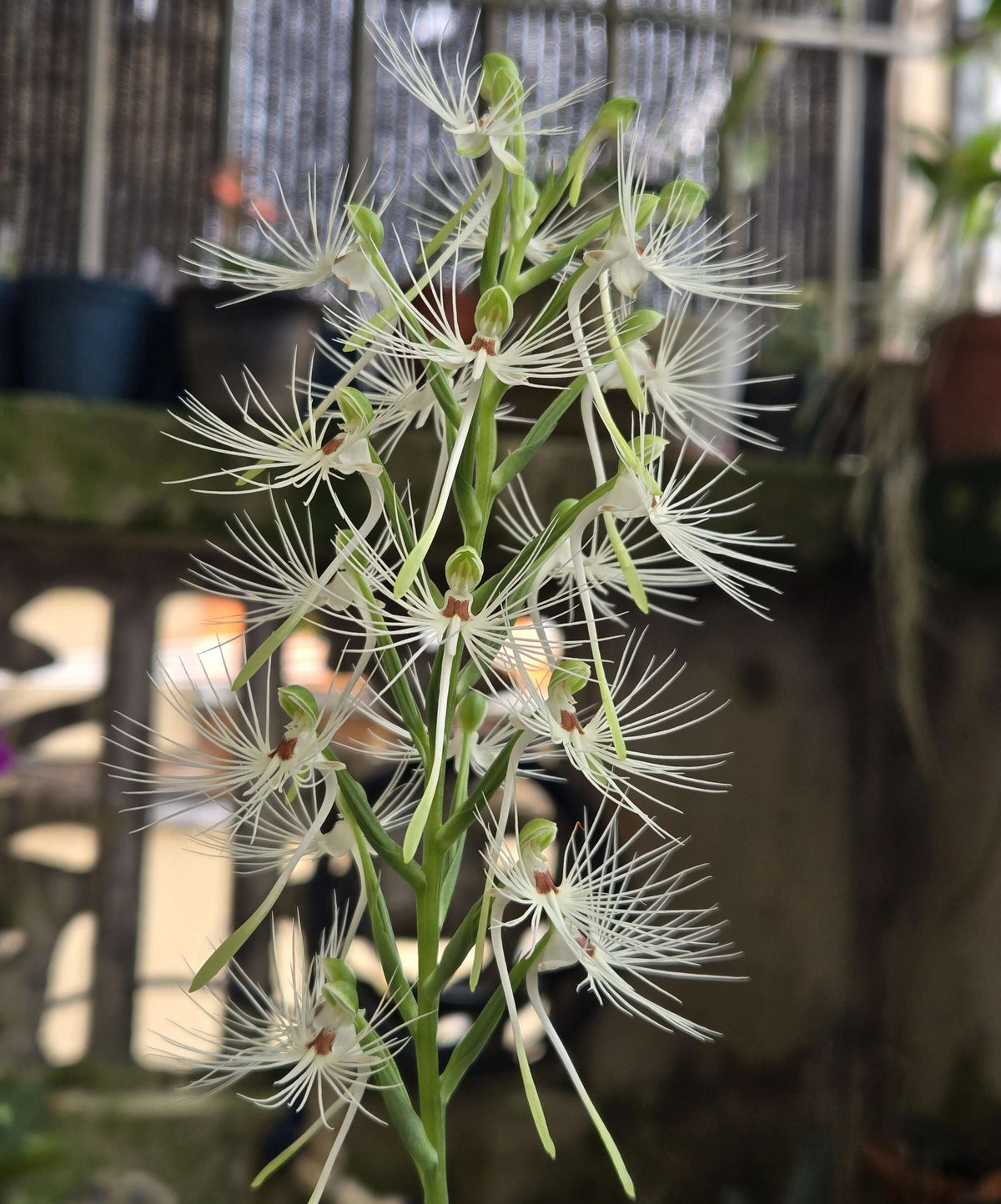
Habenaria medusa is a striking tuberous terrestrial orchid native to western and central Malesia, including Borneo, Java, Sulawesi and Sumatra. It grows primarily in wet tropical habitats and is adapted to a pronounced seasonal growth and dormancy cycle.
The plant develops 4–5 lanceolate green leaves and produces a tall, terminal inflorescence that can reach around 40 cm. The numerous white flowers have deeply divided, thread-like segments that give the inflorescence a distinctive Medusa-like or spider-like appearance. Individual flowers can reach approximately 9 cm across, making this one of the more spectacular Habenaria species.
Care Tips:
- Light: Provide bright light to partial sun during active growth. Larger Habenaria species such as H. medusa can appreciate light levels approaching those used for Cattleya orchids.
- Watering: During active growth, keep the growing medium consistently moist. Habenaria lack pseudobulbs and should not be allowed to dry out repeatedly. A shallow water tray can be useful, provided the medium remains well aerated.
- Growing Medium: Use a well-draining terrestrial orchid mix that retains moisture without becoming compacted. A combination of quality potting medium, perlite, fine bark and a small amount of charcoal works well.
- Humidity: Moderate to high humidity is beneficial, but good airflow is essential. The thin foliage can be susceptible to fungal and bacterial spotting in stagnant conditions.
- Temperature: Keep warm during active growth, approximately 18–29°C (65–85°F) during the day, with nights above about 10°C (50°F). Avoid frost.
- Fertilizing: Feed lightly with a diluted balanced fertilizer during active growth. Avoid excessive fertilizer because Habenaria can be sensitive to salt accumulation. Rainwater or distilled water is preferable where water quality is poor.
- Airflow: Provide gentle, continuous air movement, particularly in warm and humid conditions.
- Dormancy: This is very important. After flowering, the foliage naturally declines and the plant enters dormancy. Gradually reduce watering as the leaves die back, then keep the dormant tuber completely dry until new growth begins.
- Repotting: Repot or refresh the medium while the plant is dormant or just as new growth begins. Handle the tubers carefully because they are the plant's primary storage organs.
- Flowering: Good light and strong active growth generally encourage a taller spike and more flowers. The flowering period is typically associated with the plant's active growing season.
Share