Begin With Plants
Hoya Imperialis Red
Hoya Imperialis Red
Couldn't load pickup availability
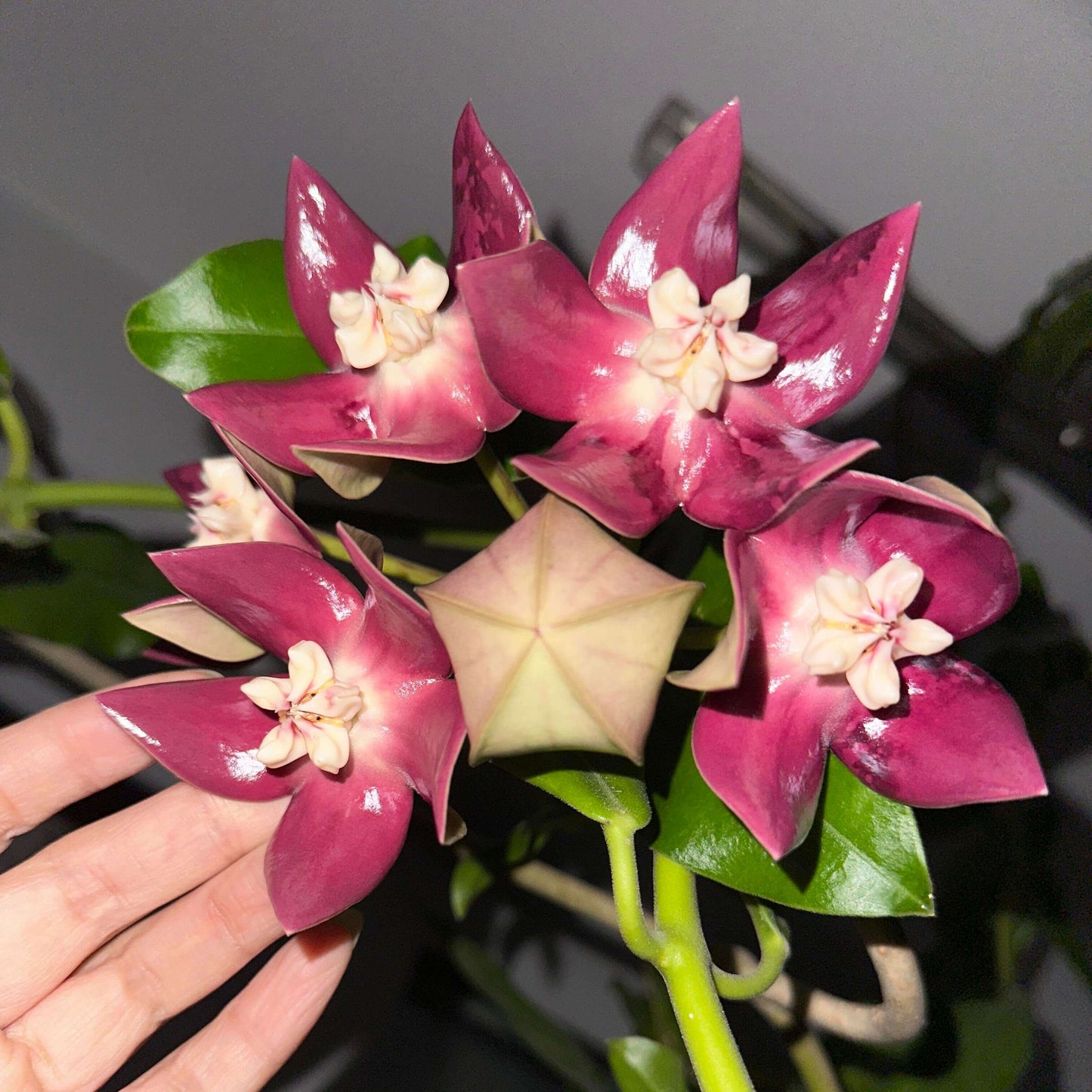
Hoya Imperialis Red features very large, velvety deep red to maroon star-shaped flowers and produces impressively sized blooms. It is a vining climber that benefits from growing up a trellis or other support, and its leaves are thick, glossy, and fairly large with a slightly succulent texture. Native to tropical Southeast Asia, this species thrives in warm, humid environments and does best when its natural conditions are replicated indoors.
Care Tips:
-
Light
-
Bright, indirect light is best.
-
Avoid harsh direct sun, which might damage leaves.
-
-
Water
-
Let the top couple of centimeters of soil dry out before watering again.
-
In lower light or cooler temps, reduce watering frequency.
-
-
Humidity
-
Prefers fairly high humidity (about 60% or more).
-
If your air is dry, consider a humidifier, pebble tray, or grouping with other plants.
-
-
Soil
-
Use a chunky, well-draining mix. Good components: orchid bark, perlite, maybe coco coir or a light peat-free mix.
-
Avoid soil that holds too much moisture — this plant hates being waterlogged.
-
-
Temperature
-
Ideal range: ~18–26 °C (65–80 °F).
-
Avoid cold drafts; don’t let it dip too low.
-
-
Support / Training
-
Because it’s a climber, give it a trellis, support, or allow it to trail.
-
The stems can be a bit delicate, especially new growth — careful when handling.
-
-
Flowering
-
Peduncles (flower stalks) should be left, not cut off — they can rebloom.
-
It may take time/maturity to produce flowers reliably.
-
-
Propagation
-
Cuttings: choose ones with several nodes. Some root in water, but many find better success rooting in coco coir / peat / coir mix.
-
It’s slower to bloom from cuttings, so if flowering is your goal, be patient.
-
-
Fertilizer
-
During its active growing season (spring/summer), a balanced houseplant fertilizer diluted to about half strength once a month works well.
-
Don’t overfeed — hoyas generally don’t need heavy fertilization.
-
-
Pests / Problems
-
Watch for overwatering — root rot is a risk if soil is too dense or stays soggy.
-
Some growers report brown/red spots from sun stress or inconsistent watering.
-
Share