Begin With Plants
Hoya lasiantha
Hoya lasiantha
Couldn't load pickup availability
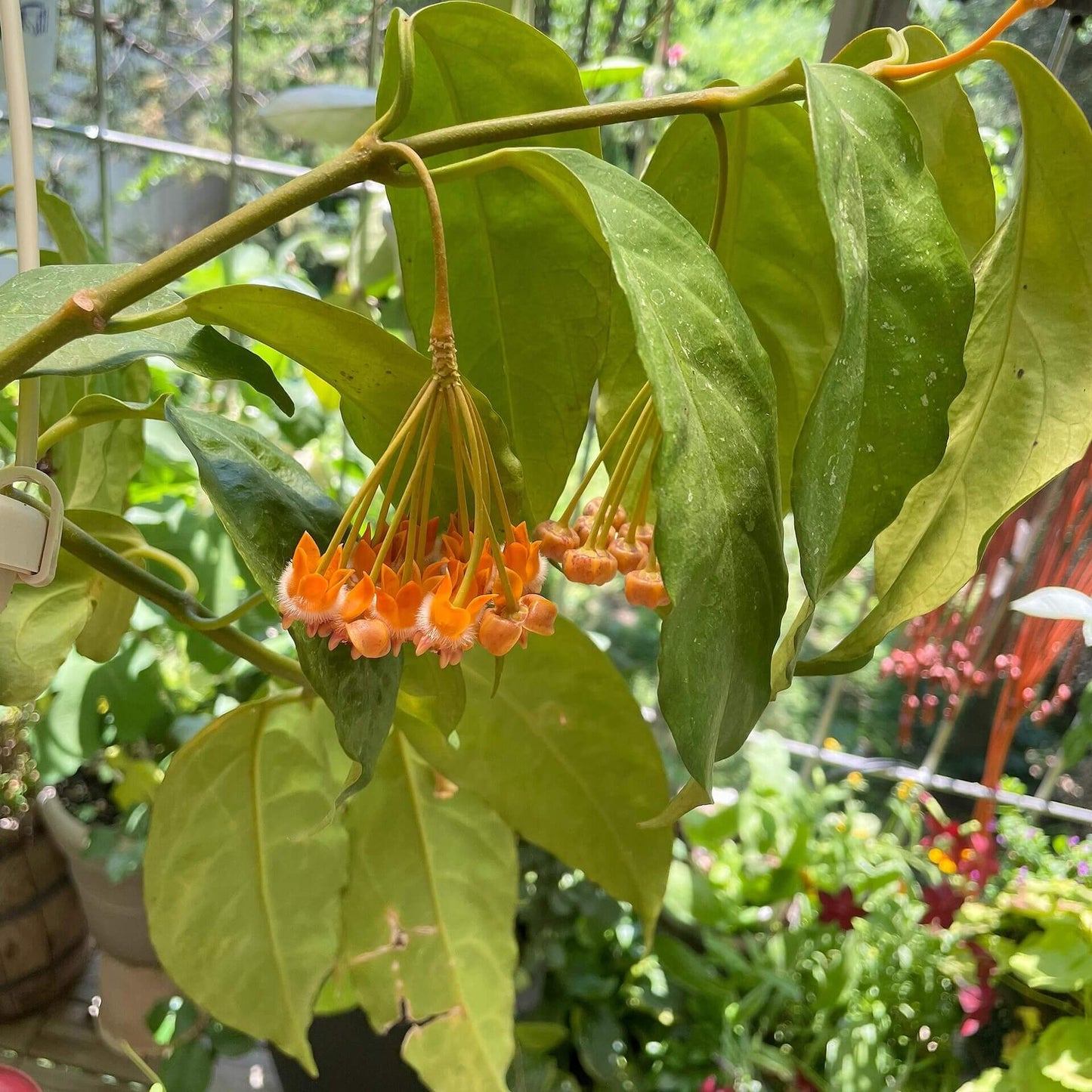
Hoya lasiantha is an epiphytic shrub native to tropical regions including Peninsular Malaysia, Borneo, Sumatra, and Thailand, characterized by drooping, hanging branches that make it well-suited for trailing or hanging displays.
Features:
-
Leaves:
-
Elliptical, relatively thin (paper-like) leaves.
-
Leaf veins are pinnate, with clearly visible lighter veins.
-
-
Stems: Branches can reach up to ~80 cm in length; stems are around 5 mm in diameter.
-
Flowers:
-
Flowers form in umbels (clusters) of 8–14 blooms.
-
Color: Pale orange to yellow petals, with dense white, fine hairs on the inner lower half.
-
Corolla ~1–1.5 cm in diameter.
-
The “hairy” or “woolly” structure of the flowers is actually part of its name: lasiantha comes from Greek meaning “hairy-flowered.”
-
-
Fruit: Produces long, straight seed pods (~18–22 cm).
-
Difficulty: According to growers, it's relatively “easy to grow” but difficult to flower reliably.
Care Tips:
-
Light:
-
Provide bright, indirect light. As an epiphyte, it does well under filtered light.
-
Avoid harsh, direct sunlight that could scorch leaves.
-
-
Watering:
-
Use a “soak and dry” approach: water thoroughly, then allow the medium to dry out somewhat before watering again.
-
Don’t let the roots stay waterlogged—good drainage is key.
-
-
Substrate / Soil:
-
Use a well-draining mix, such as bark + perlite + sphagnum or a light epiphytic blend.
-
Alternatively, it can be grown in semi-hydroponic systems (e.g., LECA), which some growers report accelerates growth.
-
-
Temperature:
-
Prefers warm tropical temperatures. Keep above ~15 °C. (Note: some growers emphasize a night/day temperature differential.)
-
-
Humidity:
-
Moderate to high humidity is ideal, consistent with its native tropical habitat.
-
-
Fertilizer:
-
Feed lightly during the growing season (spring/summer) using a balanced, diluted fertilizer.
-
Reduce feeding during slower growth periods.
-
-
Encouraging Blooms:
-
Flowering can be challenging; many growers report bud drop.
-
Some hobbyists suggest cooler night temperatures may help bud retention.
-
Be patient — buds may take time, and there’s a risk of losing peduncles.
-
Share