1
/
of
2
Begin With Plants
Hoya minahassae
Hoya minahassae
Regular price
$29.99 USD
Regular price
Sale price
$29.99 USD
Unit price
/
per
Shipping calculated at checkout.
Couldn't load pickup availability
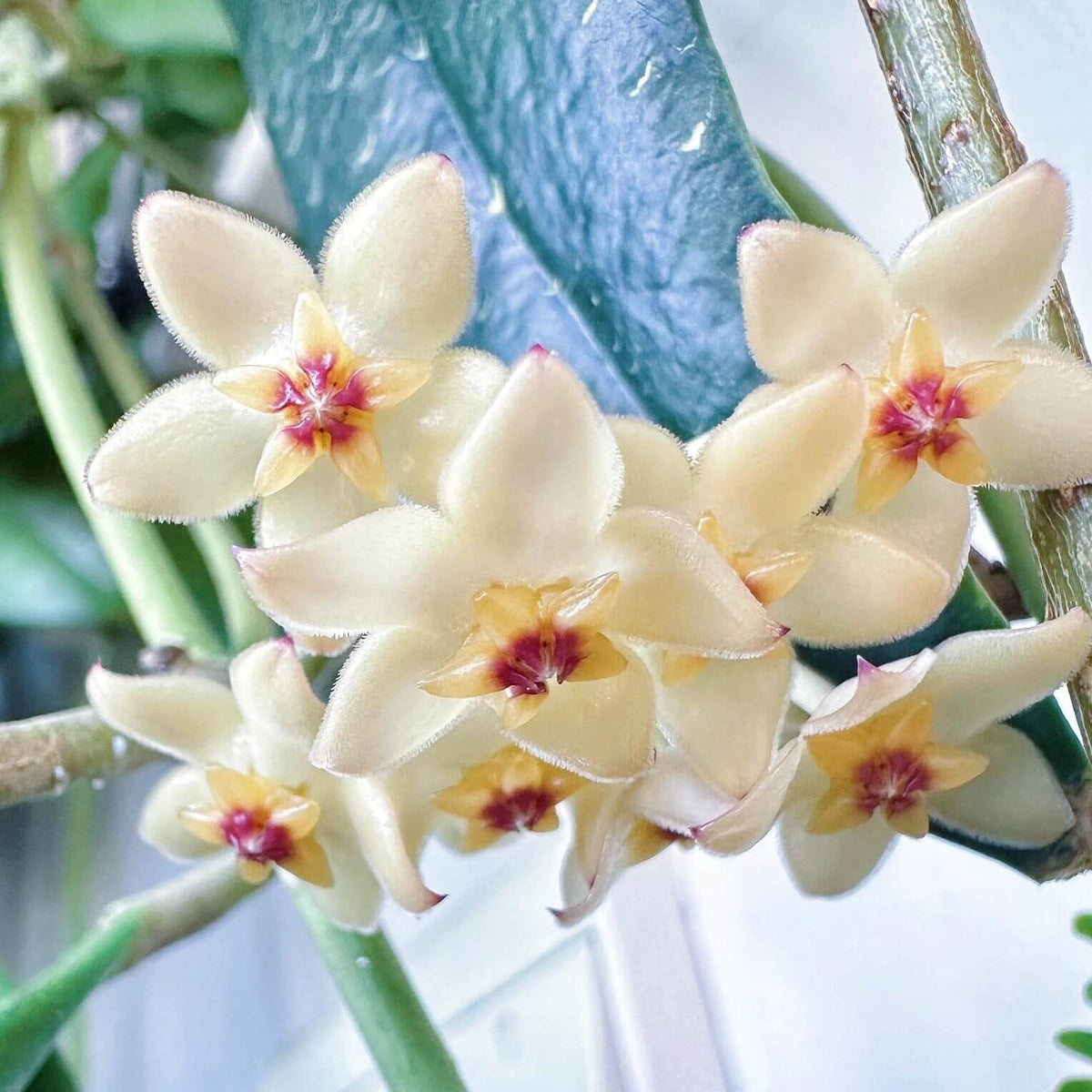
Hoya minahassae is a rare Hoya species endemic to Sulawesi, Indonesia, named after the Minahasa region of northern Sulawesi. It naturally grows as an epiphyte in humid mountain forests, generally at elevations above 800 m, where it has been found growing on moss-covered tree branches.
This species is characterized by its thick, fleshy stems and succulent, elliptic leaves with pointed tips and very subtle venation. The peduncles are unusually short and thick, producing compact, concave umbels containing only a few flowers. The flowers are white, with a distinctive hairy corolla and an unusual upward-facing corona.
Care Tips:
- Light: Provide bright, indirect light or filtered sunlight. Gentle morning or late-afternoon sun is beneficial, while strong midday sunlight should be filtered.
- Watering: Allow the growing medium to partially dry before watering thoroughly. Avoid keeping the roots constantly wet.
- Growing Medium: Use a chunky, airy, fast-draining mix such as orchid bark, perlite, and organic material. Excellent drainage is important for this epiphytic species.
- Humidity: Moderate to high humidity around 60–80% is recommended, with good airflow.
- Temperature: Keep warm and stable, ideally around 18–28°C (65–82°F). Because it naturally occurs in montane habitats, it can appreciate slightly cooler nighttime temperatures.
- Airflow: Provide gentle, consistent airflow, especially in high humidity.
- Fertilizing: Feed lightly with a diluted balanced fertilizer during active growth.
- Support: Provide a small trellis or hoop if the stems begin to climb, or allow the plant to trail naturally.
- Potting: Use a relatively small pot with an airy medium. Avoid oversized containers that retain moisture for too long.
- Flowering: Keep conditions stable once buds appear. Avoid sudden changes in watering, temperature, or light, as these can cause bud drop. Leave old peduncles intact because Hoyas can rebloom from established flower spurs.
Share