Begin With Plants
Labuk River Paraphalaenopsis (Paraphalaenopsis labukensis)
Labuk River Paraphalaenopsis (Paraphalaenopsis labukensis)
Couldn't load pickup availability
Labuk River Paraphalaenopsis (Paraphalaenopsis labukensis) is an orchid species endemic to Sabah in northern Borneo, Malaysia. It grows epiphytically on trees in hill forests on ultramafic (iron‑rich) soils at elevations of approximately 500–1,000 m above sea level. Renowned among orchids for having some of the longest leaves recorded, it has earned the nickname “rat‑tailed orchid.”
Features:
-
Growth Form: Monopodial, epiphytic orchid (grows on trees).
-
Leaves: Very long, narrow, terete (cylindrical) leaves—often pendulous. In cultivation they can reach over 2 m (>6 ft), and reports suggest they may even exceed 3 m in exceptional cases.
-
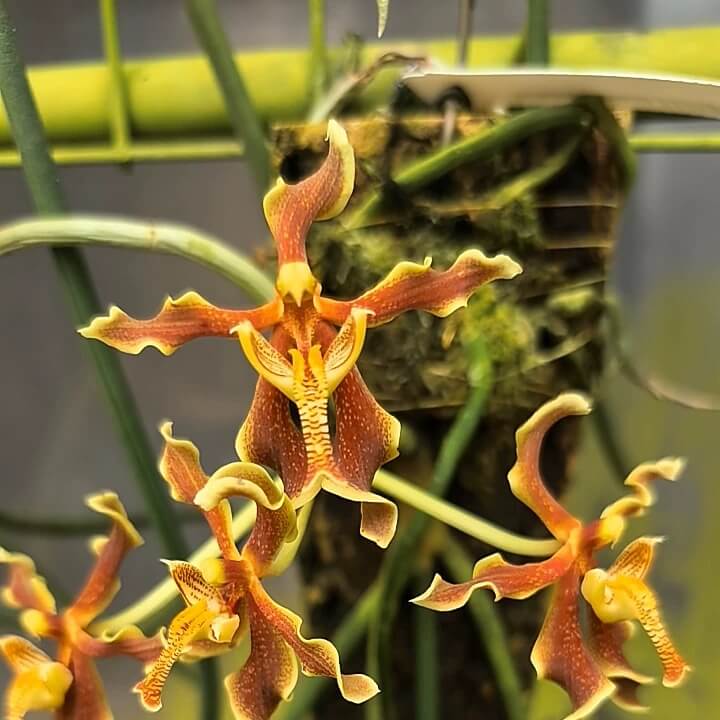
Flowers: Typically 5–15 flowers per inflorescence, about 6 cm (≈2.5 in) across. Natural coloration is often brown/cinnamon with green or yellow accents, and the blooms have a cinnamon‑like fragrance.
Care Tips:
-
Bright, indirect sunlight; avoid direct midday sun to prevent leaf burn. Can tolerate morning or late afternoon sun in small doses.
-
Keep roots moist but not soggy. Water more frequently in warm, active growth periods; reduce slightly during cooler or slower growth. Mounted plants may need daily misting in dry climates.
-
Warm to intermediate: 20–30 °C (68–86 °F) during the day, 15–20 °C (59–68 °F) at night. Avoid sudden temperature drops.
-
Prefer high humidity: 60–80%. Ensure good air circulation to prevent fungal and bacterial issues.
-
Epiphytic: best mounted on bark, cork, or in a hanging basket. Roots should be exposed to air as they naturally grow pendulously.
-
Use a balanced orchid fertilizer (20-20-20) at ¼–½ strength every 2–3 weeks during active growth. Flush with water occasionally to prevent salt buildup.
-
Remove dead or damaged leaves and flower spikes to encourage healthy growth. Monitor roots regularly; trim only rotted sections.
-
Extremely long leaves require ample vertical space. Sensitive to overwatering; ensure drainage if in baskets. Avoid exposure to cold drafts or prolonged dry air.
Share