1
/
of
2
Begin With Plants
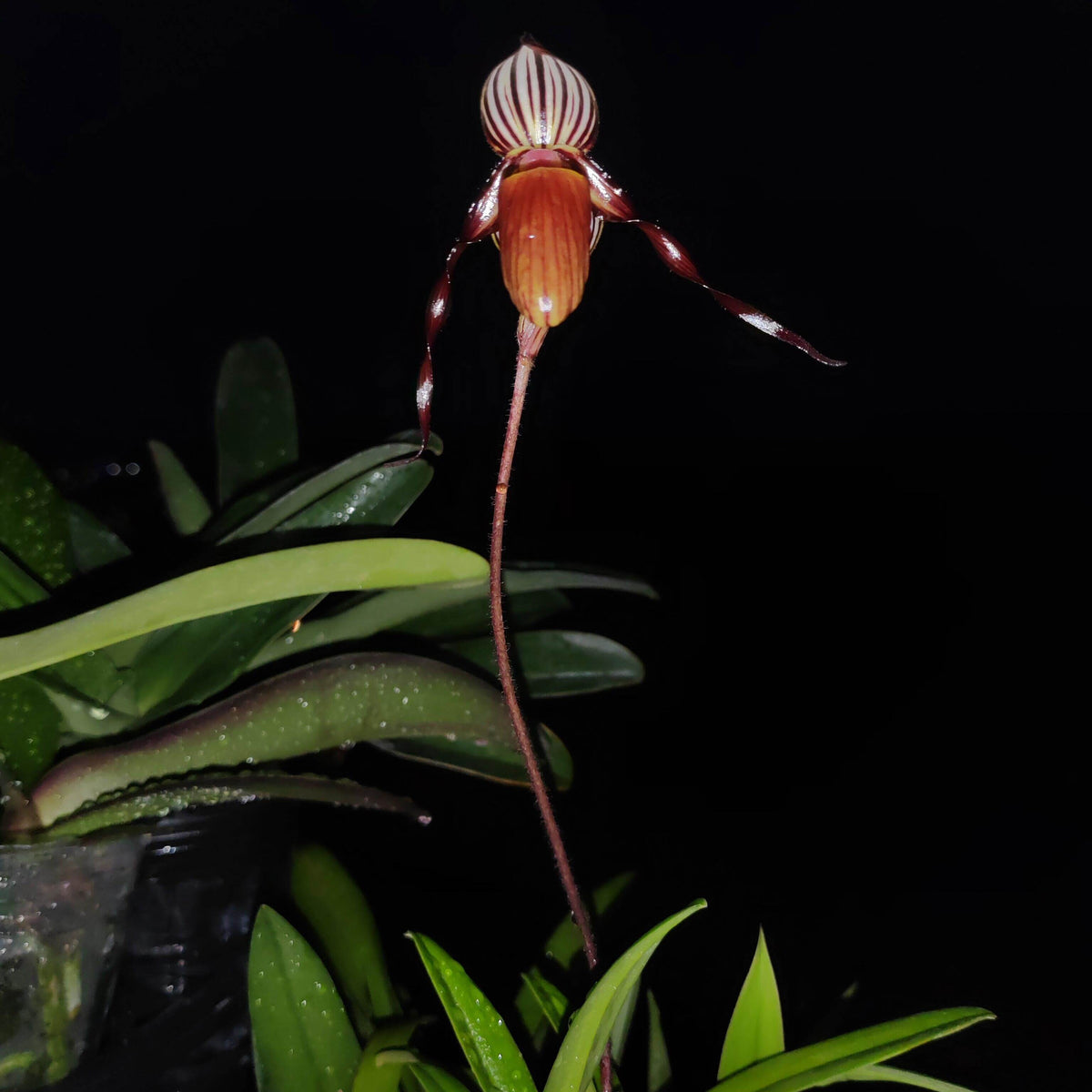
Paphiopedilum gardineri
Paphiopedilum gardineri
Regular price
$99.99 USD
Regular price
Sale price
$99.99 USD
Unit price
/
per
Shipping calculated at checkout.
Couldn't load pickup availability
Paphiopedilum gardineri is a large, warm-growing, strap-leaved Paphiopedilum native to New Guinea, where it grows in warm, humid forest habitats. It develops clusters of long, narrow, dark green leaves and produces tall, successive-flowering inflorescences. The flowers are characterized by their green, yellow and brown coloration, with broad petals and a distinctive slipper-shaped pouch. It is an attractive species for collectors interested in warm-growing Paphiopedilums.
Care Tips:
- Light: Provide bright, filtered light or moderate shade. Avoid strong direct midday sunlight, especially in hot climates.
- Watering: Keep the potting medium evenly moist but never waterlogged. Do not allow the roots to remain completely dry for extended periods.
- Growing Medium: Use an open, well-draining Paphiopedilum mix containing fine or medium bark, perlite and a moisture-retentive component such as sphagnum.
- Humidity: Maintain 60–80% humidity with good air circulation. Higher humidity is particularly beneficial during active growth.
- Temperature: Keep conditions warm, ideally around 21–29°C (70–85°F) during the day, with warm nights. Avoid prolonged exposure to temperatures below 15°C (59°F).
- Fertilizing: Apply a diluted balanced orchid fertilizer regularly during active growth. Flush the pot with clean water periodically to prevent salt buildup.
- Airflow: Provide gentle, continuous airflow. Good ventilation is especially important when humidity is high.
- Potting: Use a stable pot with excellent drainage. Avoid oversized pots that retain excessive moisture.
- Repotting: Repot when the growing medium begins to break down or when the plant has established new roots. Avoid unnecessary disturbance of the root system.
- Flowering: Maintain stable warmth, moderate light and consistent moisture while the flowering stem develops. Mature plants can produce flowers successively over an extended period.
Share