Begin With Plants
Paphiopedilum gratrixianum
Paphiopedilum gratrixianum
Couldn't load pickup availability
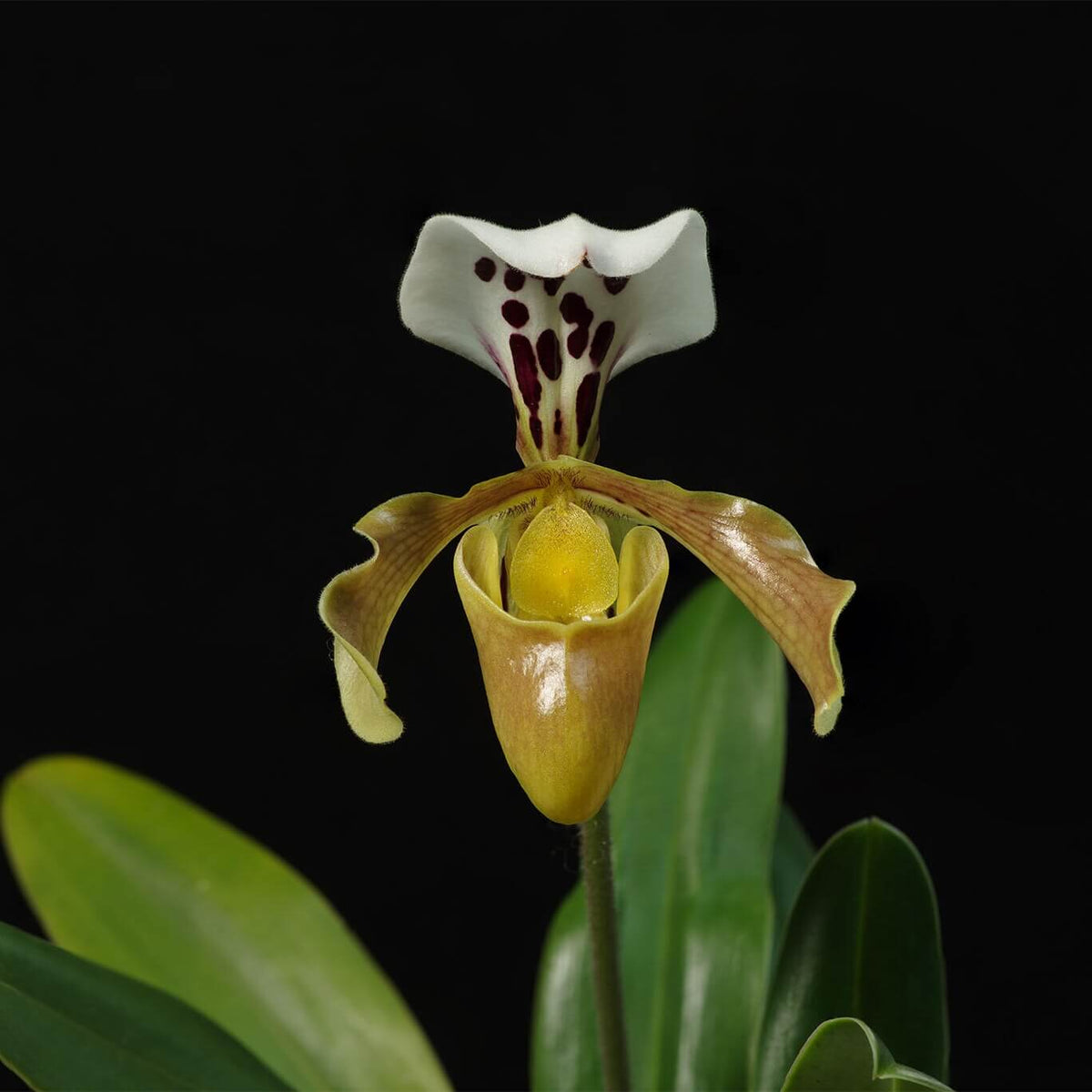
Paphiopedilum gratrixianum is a distinctive single-flowered Paphiopedilum native to southern China and northern Indochina, including Vietnam, Laos, Thailand and southern China. It grows as a terrestrial or lithophytic orchid in humid subtropical to tropical habitats, particularly in montane forests.
The plant forms compact clumps of 4–7 narrow, upright green leaves, often with purple spotting on the undersides near the base. The erect flower spike normally carries a single long-lasting flower, approximately 7–8 cm across. The dorsal sepal is white with heavy purple spotting, while the glossy yellow petals are flushed and veined purple-brown. The yellow lip and yellow staminode complete the distinctive coloration.
Care Tips:
- Light: Provide moderate to bright filtered light. Protect the plant from strong direct midday sunlight. It naturally grows in shaded forest environments.
- Watering: Keep the medium evenly moist but not waterlogged. Allow it to approach dryness between waterings, but do not let it become completely dry for extended periods.
- Growing Medium: Use a moisture-retentive but well-aerated terrestrial orchid mix, such as fine bark, sphagnum and perlite. Crushed limestone can also be incorporated into the mix.
- Humidity: Moderate to high humidity is beneficial, with good air circulation. Avoid stagnant conditions around the crown.
- Temperature: Intermediate to cool conditions are suitable. RHS recommends approximately 20–25°C during summer and 18–22°C during winter, with cooler nights.
- Fertilizing: Apply a diluted orchid fertilizer regularly during active growth. RHS recommends fertilizing approximately every third watering.
- Airflow: Provide gentle, continuous airflow, particularly when humidity is high.
- Potting: Use a pot with good drainage and repot when the growing medium begins to break down. Avoid leaving the roots in standing water.
- Flowering: The flowers are long-lasting. Keep watering and temperature relatively stable during bud development and avoid prolonged drying.
Share