1
/
of
2
Begin With Plants
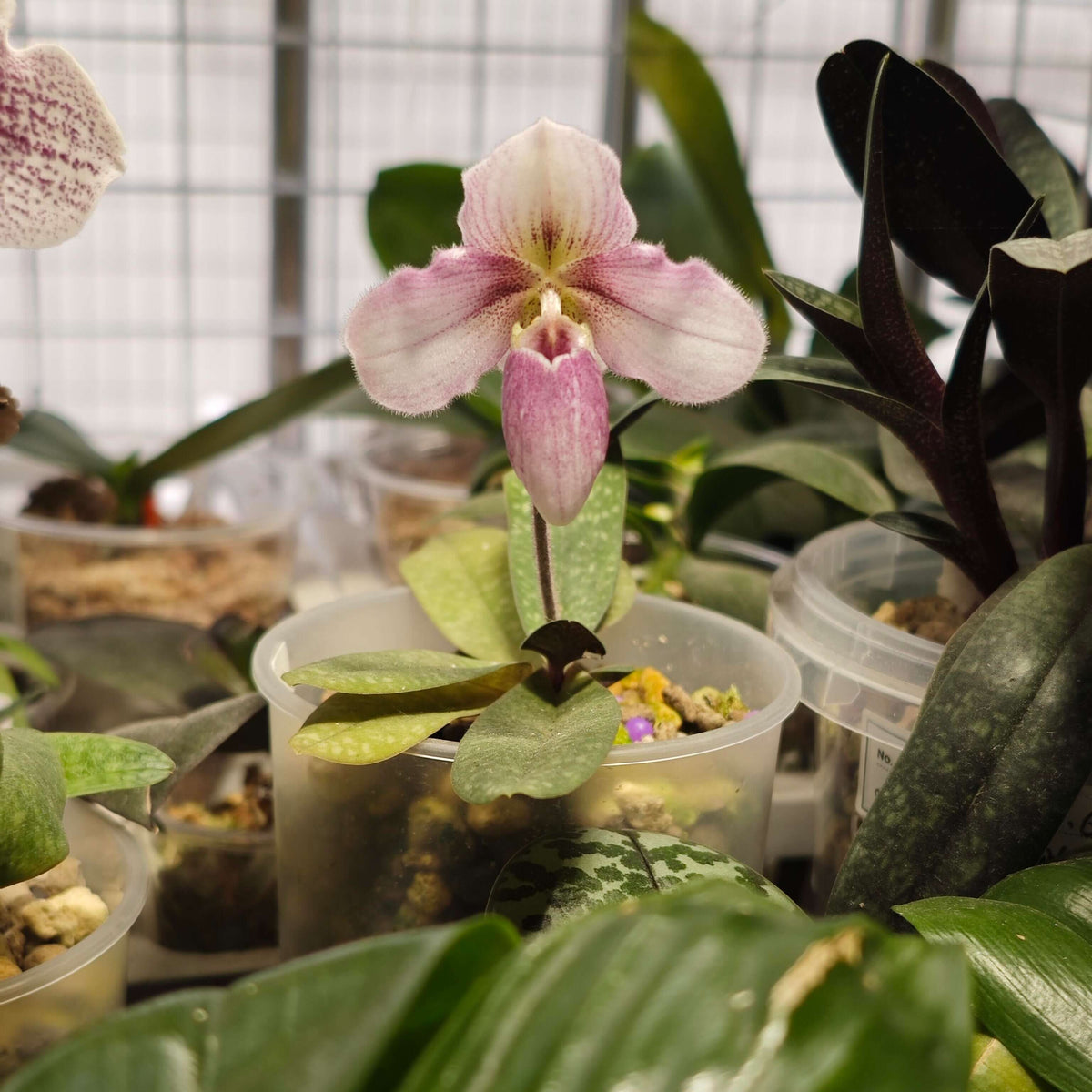
Paphiopedilum Haiphong Baby
Paphiopedilum Haiphong Baby
Regular price
$99.99 USD
Regular price
Sale price
$99.99 USD
Unit price
/
per
Shipping calculated at checkout.
Couldn't load pickup availability
Paphiopedilum Haiphong Baby is a registered primary hybrid between Paphiopedilum rungsuriyanum × Paphiopedilum niveum.
This is a particularly compact hybrid, combining the small stature and distinctive flower form of P. rungsuriyanum with the rounded white flowers and purple spotting of P. niveum. It can produce a relatively large, rounded flower on a very small plant, making it well suited to windowsills and limited growing spaces.
Care Tips:
- Light: Provide bright, filtered light or gentle morning/evening sunlight. Haiphong Baby can tolerate fairly bright conditions, but protect it from intense midday summer sun. AOS gives approximately 1,000–2,000 foot-candles as a general Paphiopedilum range.
- Watering: Keep the medium consistently lightly moist, but never waterlogged. Avoid allowing the roots to dry completely for extended periods.
- Growing Medium: Use a well-draining Paphiopedilum mix such as fine bark, perlite/pumice and a moisture-retentive component. A mineral-based medium can also work well. One grower successfully cultivated Haiphong Baby in Akadama with a reservoir-style watering system.
- Humidity: Moderate to high humidity is beneficial, together with good airflow.
- Temperature: Intermediate conditions are suitable. AOS gives Paphiopedilums a general range of about 21–29°C (70–85°F) days and 13–22°C (55–72°F) nights, with the exact preference depending on the hybrid's ancestry.
- Fertilizing: Feed with a diluted balanced orchid fertilizer during active growth. Flush the medium periodically to prevent fertilizer-salt accumulation.
- Airflow: Provide gentle, continuous airflow, particularly when humidity is high.
- Potting: Use a relatively small pot with good drainage. Because this hybrid remains compact, avoid using an unnecessarily large container.
- Flowering: Keep light, watering and temperature relatively stable while the bud develops. The flowers can be surprisingly large relative to the plant.
Share