1
/
of
4
Begin With Plants
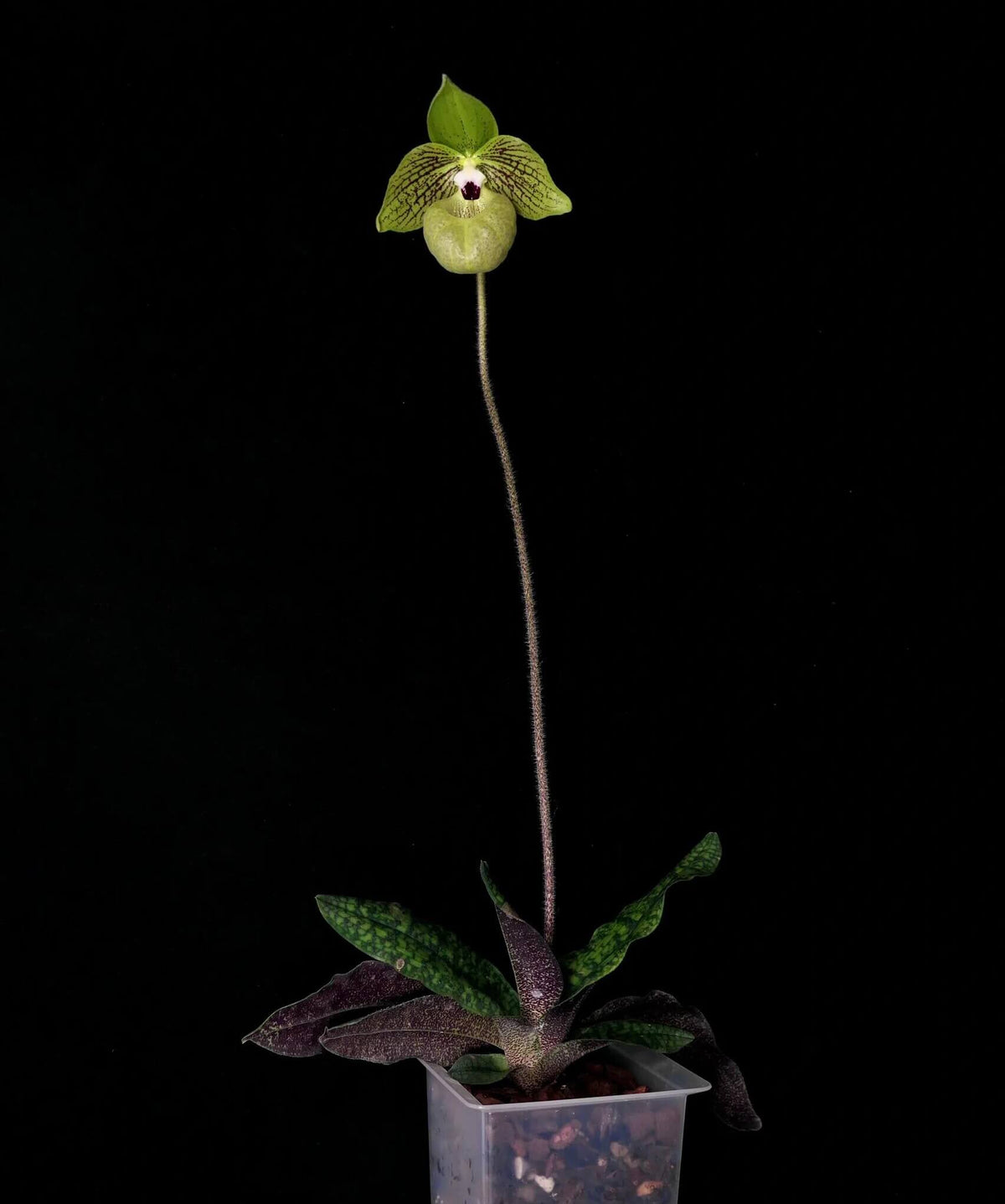
Paphiopedilum malipoense
Paphiopedilum malipoense
Regular price
$49.99 USD
Regular price
Sale price
$49.99 USD
Unit price
/
per
Shipping calculated at checkout.
Couldn't load pickup availability
Paphiopedilum malipoense S.C.Chen & Z.H.Tsi is a lithophytic or terrestrial Paphiopedilum native to southern China and northern Vietnam. It grows mainly on limestone formations and in leaf litter of montane cloud forests, generally in partial shade at about 450–1,450 m elevation.
It is especially prized for its beautiful green tessellated foliage, purple-marked leaf undersides, large green flowers and pleasant apple-to-raspberry fragrance. The flowering stem usually carries a single large flower, occasionally two, with flowers around 7.5–12 cm across.
Care Tips:
- Light: Provide moderate, filtered light. Avoid strong direct midday sunlight, but adequate light is important for healthy growth and flowering.
- Watering: Keep the growing medium evenly moist but not waterlogged during active growth. Avoid prolonged drying.
- Growing Medium: Use a loose, well-draining Paphiopedilum mix. Because the species naturally grows on limestone, a mix containing bark, perlite and some mineral/gritty material is appropriate.
- Humidity: Maintain approximately 60–80% humidity with good air circulation.
- Temperature: Provide cool to intermediate conditions, particularly during winter. A cooler winter period can help encourage flowering.
- Fertilizing: Feed lightly with a diluted balanced orchid fertilizer during active growth. Flush the medium regularly to prevent fertilizer-salt buildup.
- Airflow: Gentle, continuous airflow is important, especially under humid conditions.
- Potting: Use a well-draining pot and avoid excessively large containers. The roots should have access to both moisture and air.
- Repotting: Repot when the growing medium begins to decompose or when new roots are developing. Avoid unnecessary disturbance.
- Flowering: Good light during growth followed by a somewhat cooler winter period can encourage flowering. The flowers are particularly attractive when the plant is kept stable while the spike develops.
Share