1
/
of
3
Begin With Plants
Paphiopedilum myanmaricum
Paphiopedilum myanmaricum
Regular price
$99.99 USD
Regular price
Sale price
$99.99 USD
Unit price
/
per
Shipping calculated at checkout.
Couldn't load pickup availability
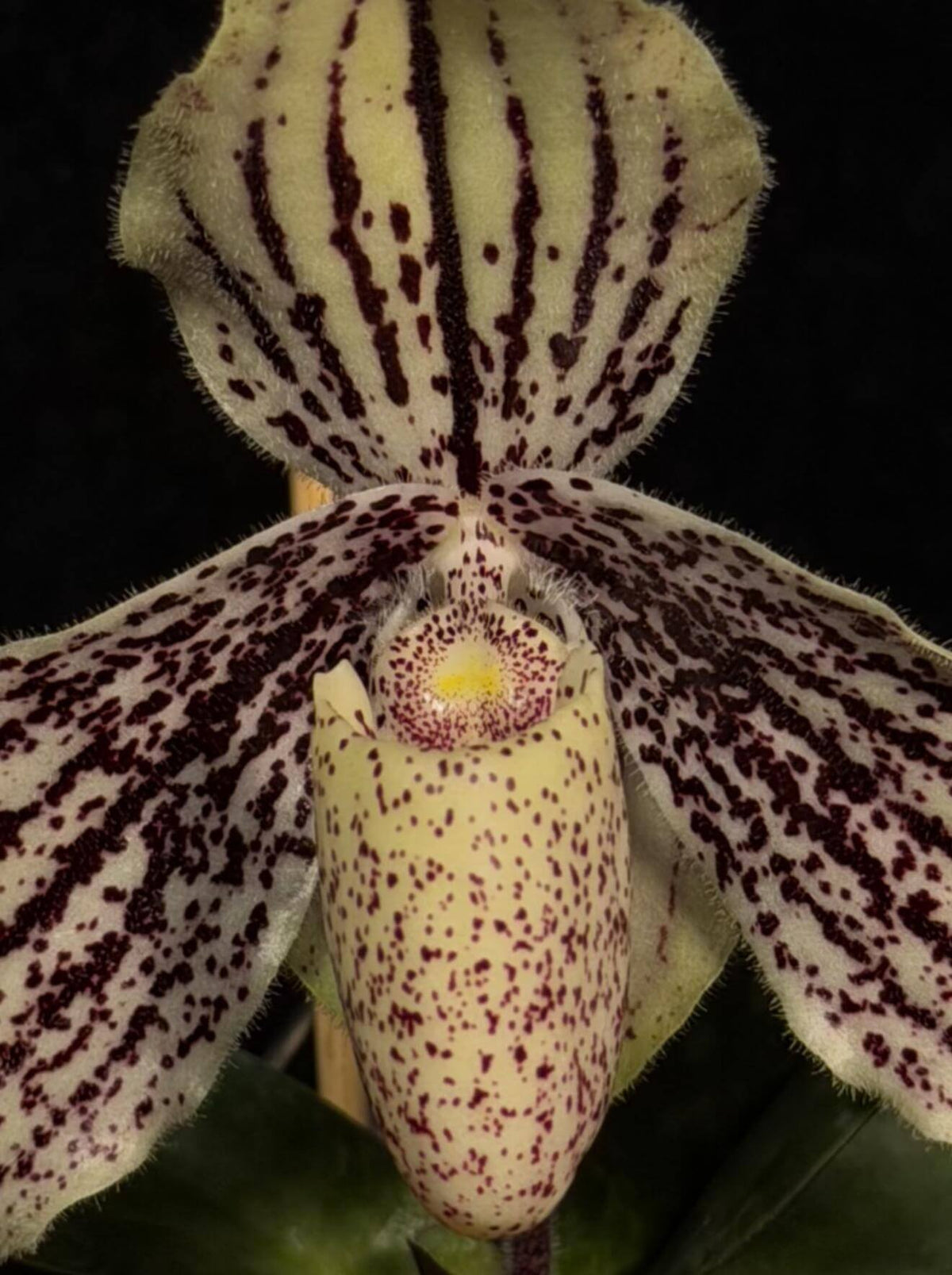
Paphiopedilum myanmaricum is a rare Brachypetalum-section Paphiopedilum described from southern Myanmar in 2017. It grows in wet tropical habitats, particularly on steep limestone cliffs and rocky slopes in evergreen forest and scrub at relatively low elevations of about 200–400 m.
The plant is compact, with 4–6 short, leathery, tessellated leaves. The undersides of the leaves are notably purple, while the flowers are borne singly on a short, pendent inflorescence. The flowers are relatively large, approximately 6.3–9.2 cm across, with cream to pale yellow coloration, maroon-purple spotting and markings, hairy margins, and a distinctive yellow-centered staminode.
Care Tips:
- Light: Provide bright, filtered light. Avoid strong midday direct sunlight, especially during hot weather. Paphiopedilums generally perform well under moderate light.
- Watering: Keep the medium lightly and consistently moist, but never saturated. Do not allow the plant to remain completely dry for extended periods.
- Growing Medium: Use a moisture-retentive but well-aerated Paphiopedilum mix, such as fine or medium bark, perlite, and other suitable organic material. Because P. myanmaricum naturally grows on limestone, a slightly calcareous medium can also be appropriate.
- Humidity: Moderate to high humidity is beneficial, but good airflow is essential. Avoid stagnant, continuously wet conditions around the crown.
- Temperature: This is a warm-growing species from low-elevation southern Myanmar. Aim for approximately 20–30°C (68–86°F) during active growth and protect it from prolonged cold conditions. Its natural habitat at 200–400 m supports keeping it warmer than cool-growing Paphiopedilums.
- Airflow: Maintain gentle, continuous air movement, particularly in warm and humid conditions.
- Fertilizing: Feed with a diluted balanced orchid fertilizer during active growth. Periodically flush the medium with clean water to prevent fertilizer-salt buildup.
- Potting: Use a relatively small pot with good drainage. Repot when the medium begins to break down rather than allowing the old medium to become compacted.
- Flowering: Avoid major changes in temperature, watering, or light while buds are developing. The flowers are borne on short pendent spikes and may face downward as they open.
Share