1
/
of
4
Begin With Plants
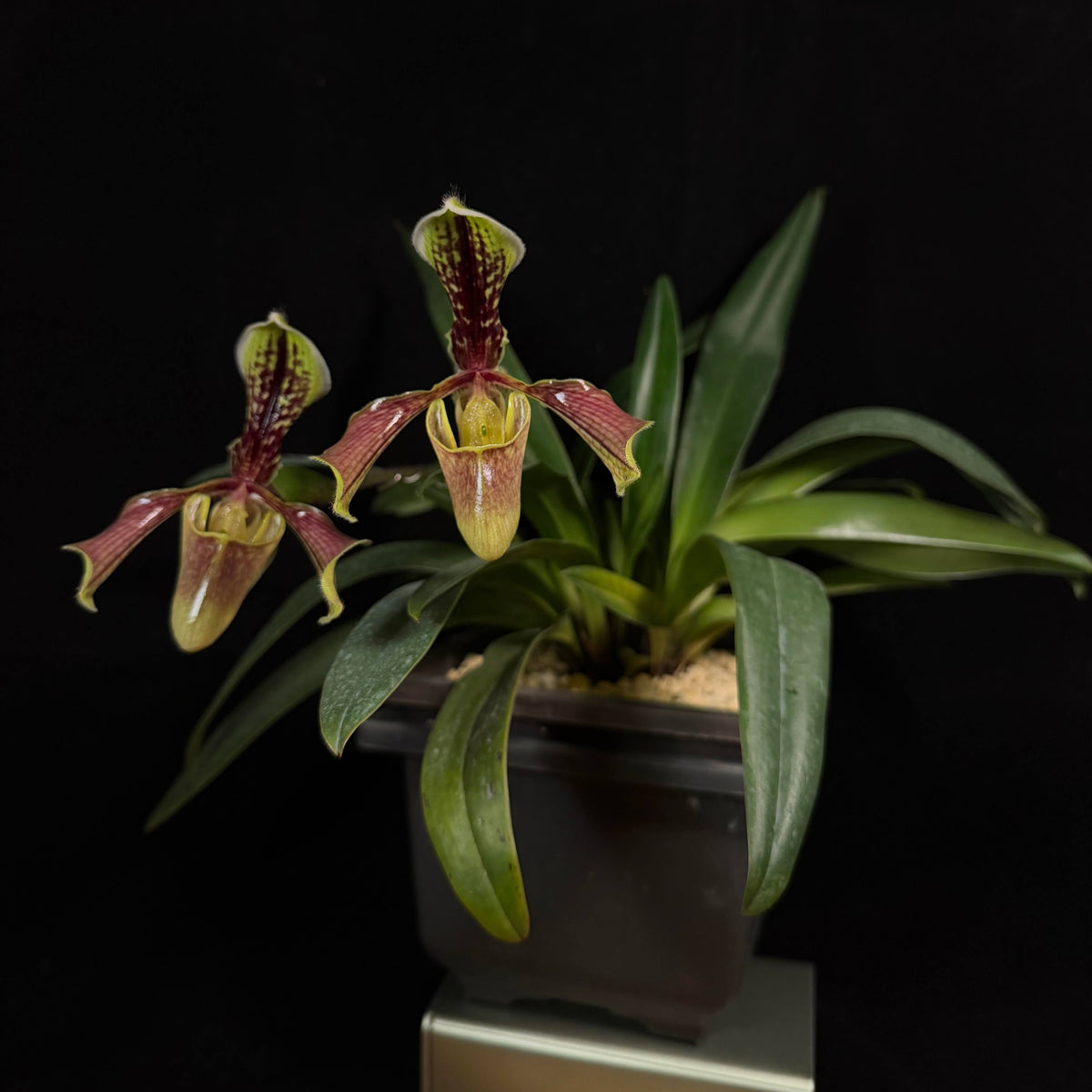
Paphiopedilum villosum var. boxallii
Paphiopedilum villosum var. boxallii
Regular price
$45.99 USD
Regular price
Sale price
$45.99 USD
Unit price
/
per
Shipping calculated at checkout.
Couldn't load pickup availability
Paphiopedilum villosum var. boxallii is a distinctive variety of Paphiopedilum villosum, native to southwestern China, Myanmar and northern Vietnam. It is an epiphytic or lithophytic orchid associated with wet forest habitats, often growing on limestone cliffs, rocks and moss-covered surfaces. The plant forms a compact clump of leathery green leaves and produces an upright to arching, single-flowered inflorescence. Its large flowers are especially notable for the heavily spotted dorsal sepal, with bold dark purple to maroon markings contrasting against the green background, while the petals are reddish brown with darker central markings.
Care Tips:
- Light: Provide moderate, filtered light or bright shade. Avoid strong direct midday sunlight.
- Watering: Keep the medium evenly moist but not waterlogged. Avoid allowing the roots to remain completely dry for extended periods.
- Growing Medium: Use a moisture-retentive but well-draining Paphiopedilum mix containing fine bark, sphagnum and perlite. A small amount of limestone or other mineral material can be appropriate for this limestone-associated orchid.
- Humidity: Maintain around 60–80% humidity with good air circulation.
- Temperature: Provide cool to intermediate conditions, particularly during winter. Avoid prolonged periods of high heat.
- Fertilizing: Apply a diluted balanced orchid fertilizer during active growth. Flush the medium periodically to prevent fertilizer-salt buildup.
- Airflow: Provide gentle, continuous airflow, especially when humidity is high.
- Potting: Use a relatively small pot with good drainage. Avoid oversized containers that stay wet for too long.
- Repotting: Repot when the growing medium begins to break down, preferably when new roots are developing. Minimize disturbance to the roots.
- Flowering: Good filtered light, consistent moisture and cooler seasonal conditions can help encourage flowering. The species and this variety are known for their winter-to-spring flowering period.
Share