Begin With Plants
Phalaenopsis reichenbachiana
Phalaenopsis reichenbachiana
Couldn't load pickup availability
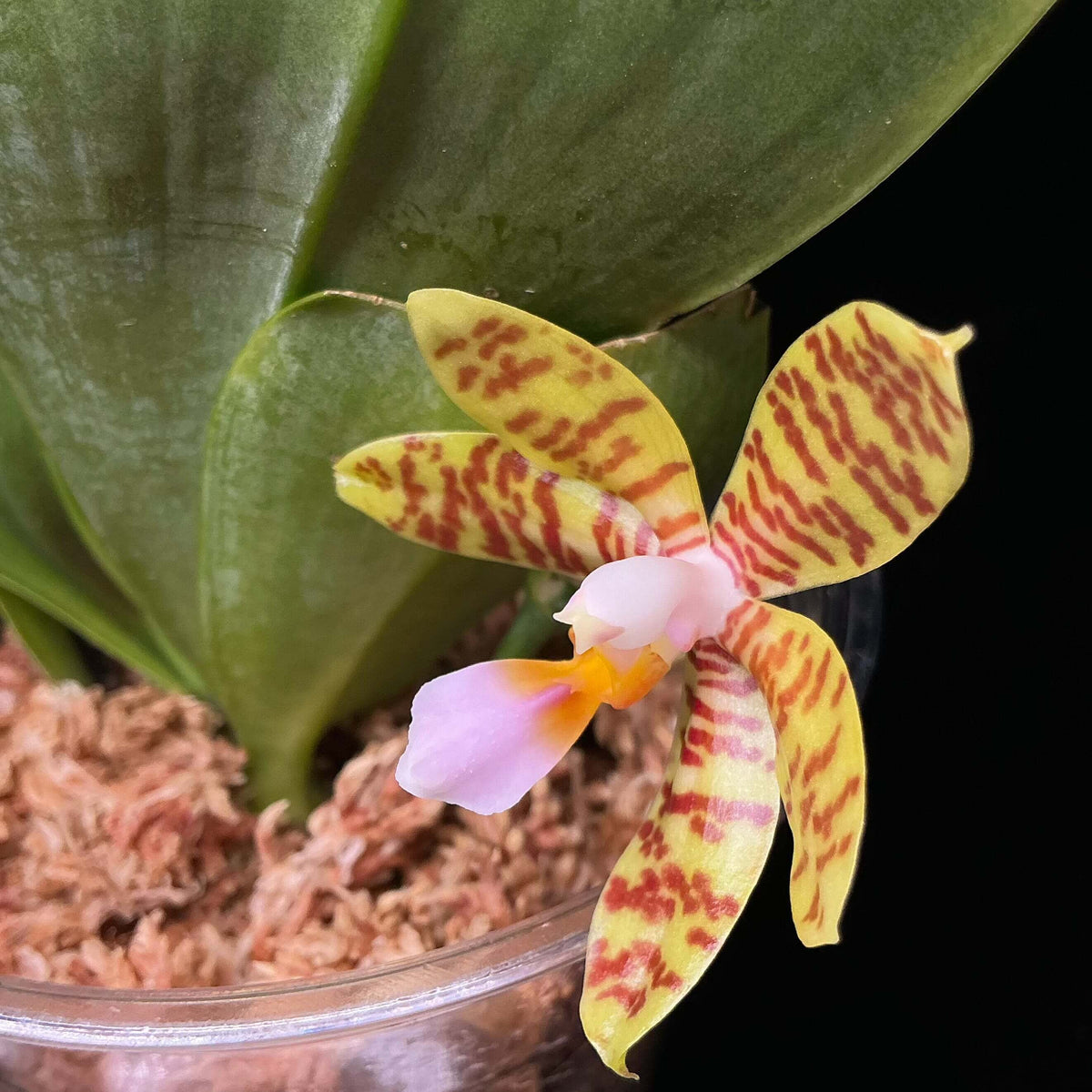
Phalaenopsis reichenbachiana is a rare epiphytic orchid endemic to Mindanao, Philippines. It is a small to medium-sized, warm-growing species with a short, robust stem and thick, obovate to elliptic leaves. The plant produces arching flower spikes carrying several waxy, fragrant flowers, typically around 4 cm across. The flowers are reported to have a pleasant green-apple-like fragrance, making this species particularly interesting to collectors of fragrant Phalaenopsis.
The flowers are generally pale yellow to yellowish with contrasting markings, and their waxy texture gives them a long-lasting appearance. P. reichenbachiana is also notable for its relatively compact vegetative growth compared with many cultivated Phalaenopsis.
Care Tips:
- Light: Provide bright, filtered light or bright indirect light. Gentle morning sunlight is beneficial, while strong midday sun should be filtered.
- Watering: Water thoroughly when the growing medium is approaching dryness, then allow excess water to drain completely. Avoid allowing the roots to remain constantly wet.
- Growing Medium: Use a very airy orchid mix such as medium-grade bark, perlite, and other chunky materials. Good root ventilation is essential for epiphytic Phalaenopsis.
- Humidity: Maintain moderate to high humidity, ideally around 60–80%, together with good air circulation.
- Temperature: Keep warm, ideally around 20–30°C (68–86°F). This species is considered a warm-growing Phalaenopsis, so avoid prolonged exposure to cool temperatures.
- Airflow: Provide gentle, continuous airflow, especially when humidity is high.
- Fertilizing: Feed with a diluted balanced orchid fertilizer during active growth. Flush the growing medium periodically to prevent fertilizer salt buildup.
- Potting: A transparent orchid pot or an open, well-ventilated container works well. Avoid oversized pots that retain moisture around the roots for too long.
- Flowering: Keep the plant relatively stable while buds are developing. Avoid sudden changes in temperature, watering, or light.
- After flowering: Do not automatically cut a healthy green flower spike; Phalaenopsis can sometimes produce additional flowers from existing nodes.
Share