Begin With Plants
Rhyncholaelia glauca (syn. Brassavola glauca)
Rhyncholaelia glauca (syn. Brassavola glauca)
Couldn't load pickup availability
Rhyncholaelia glauca (syn. Brassavola glauca) is a species of epiphytic orchid in the family Orchidaceae, native to Mexico and Central America. Its range extends from southern Mexico, including Veracruz, Oaxaca, and Tabasco, through Belize, Guatemala, and southeastern Honduras. This orchid typically grows in open mountain forests at intermediate elevations of approximately 700–1600 meters.
Features:
-
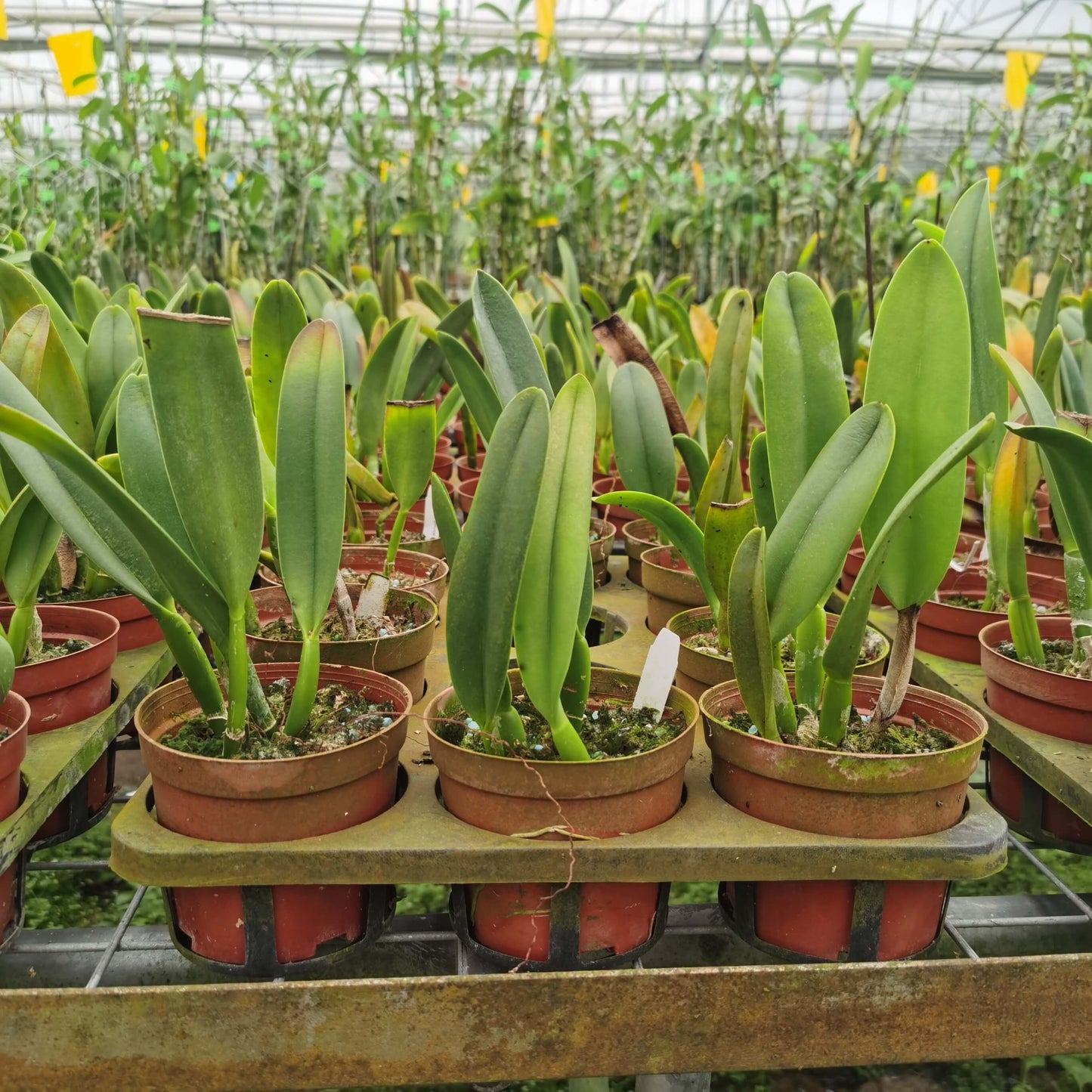
Size: Medium‑sized orchid with upright growth and pseudobulbs.
-
Leaves: Thick, upright, and often with a glaucous (blue‑green) hue.
-
Flowers: The blooms are long‑lasting and strongly fragrant, usually white to pale green or creamy with potential subtle markings; a single flower per inflorescence is common, often appearing in winter to early spring.
-
Fragrance: Flowers are known for a rose‑like or lily‑of‑the‑valley scent, particularly noticeable in the evening/night.
Care Tips:
-
Light:
-
Prefers bright, indirect light; some morning sun is beneficial.
-
Avoid harsh afternoon sun to prevent leaf burn.
-
-
Temperature:
-
Day: 20–26 °C (68–79 °F)
-
Night: 15–18 °C (59–65 °F)
-
Tolerates intermediate conditions; avoid frost.
-
-
Humidity & Airflow:
-
Moderate to high humidity (50–70%).
-
Ensure good air circulation to prevent fungal or bacterial issues.
-
-
Watering:
-
Keep medium evenly moist but not soggy.
-
Allow slight drying between waterings.
-
Reduce watering slightly in winter when growth slows.
-
-
Growing Medium:
-
Well-draining orchid mix (e.g., bark, perlite, charcoal).
-
Mounted culture is also possible if kept humid.
-
-
Fertilizing:
-
Use a balanced orchid fertilizer (20-20-20) at ¼–½ strength.
-
Fertilize every 2–3 weeks during active growth; less in winter.
-
-
Flowering:
-
Blooms in winter to early spring.
-
Flowers are fragrant and long-lasting.
-
-
Additional Tips:
-
Avoid letting roots stay waterlogged.
-
Can be used in hybridization for fragrance and bloom quality.
-
Share