Begin With Plants
Rhyncholaeliocattleya Wangnamkeaw Pink
Rhyncholaeliocattleya Wangnamkeaw Pink
Couldn't load pickup availability
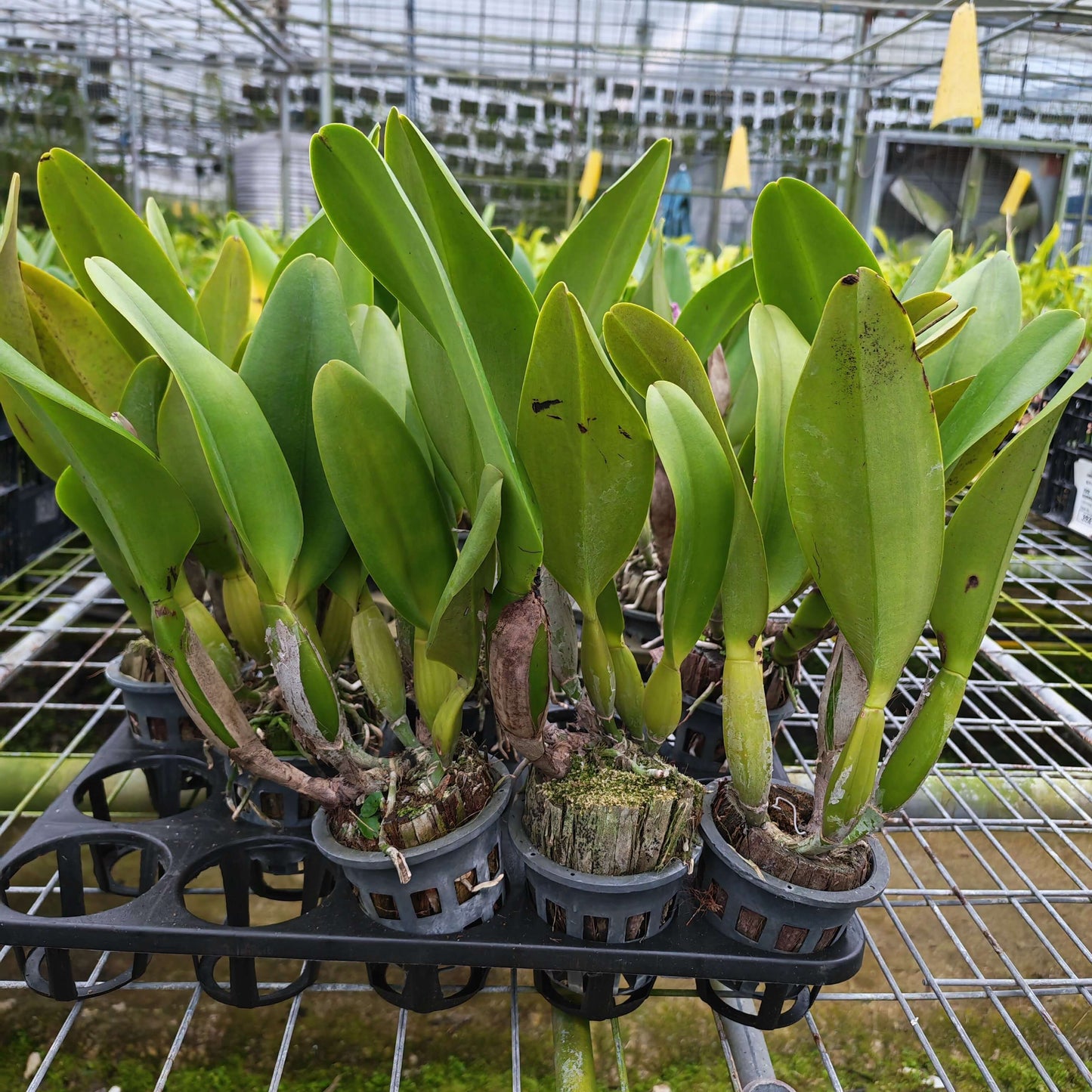
Rhyncholaeliocattleya Wangnamkeaw Pink (often abbreviated Rlc. Wangnamkeaw Pink) is a hybrid orchid in the Rhyncholaeliocattleya group—a group of showy Cattleya-alliance orchids prized for large, colorful, and often fragrant flowers.
Parentage & Background:
-
Seed Parent: Rhyncholaeliocattleya Pamela Hetherington
-
Pollen Parent: Rhyncholaeliocattleya Korat Red
-
These parents bring in genetics from classic expressive Cattleya species like Cattleya trianae, C. warscewiczii, and C. dowiana, which contribute to large, showy blooms with rich color and substance.
Care Tips:
-
Light:
-
Provide bright light (strong but not harsh direct sun).
-
Indoors, an east- or shaded south/west-facing window works well.
-
Bright light helps promote healthy foliage coloring and encourages blooming.
-
-
Temperature:
-
Aim for day temperatures around 21–29 °C (70–85 °F) and cooler nights around 13–16 °C (55–60 °F).
-
A day/night temperature differential of 10–15 °F (~5–8 °C) helps trigger blooms.
-
-
Watering:
-
Water thoroughly, then allow the growing medium to dry slightly between waterings — mature plants often prefer to dry more between waterings than seedlings.
-
Avoid letting roots sit in standing water to prevent rot.
-
-
Humidity & Airflow:
-
Maintain moderate to high humidity (50–80%) with good air circulation to reduce disease risk and support healthy root development.
-
Placing plants on humidity trays or using a humidifier can help.
-
-
Growing Medium:
-
Use a well-draining orchid mix (coarse bark with perlite/charcoal is ideal).
-
Good aeration around the roots is essential for Cattleya-alliance orchids.
-
-
Fertilizing:
-
Feed with a balanced orchid fertilizer diluted to about ¼–½ strength during active growth.
-
Regular feeding during growth phases helps support flowering and overall vigor.
-
-
Repotting:
-
Repot when the potting medium breaks down or roots crowd the container — typically every 2–3 years.
-
Best done when new root growth begins.
-
-
General Notes:
-
Flowers are large and fragrant, with lavender/pink-toned blooms depending on the clone.
-
Good light and a healthy wet/dry cycle help Wangnamkeaw Pink bloom reliably.
-
Share