Begin With Plants
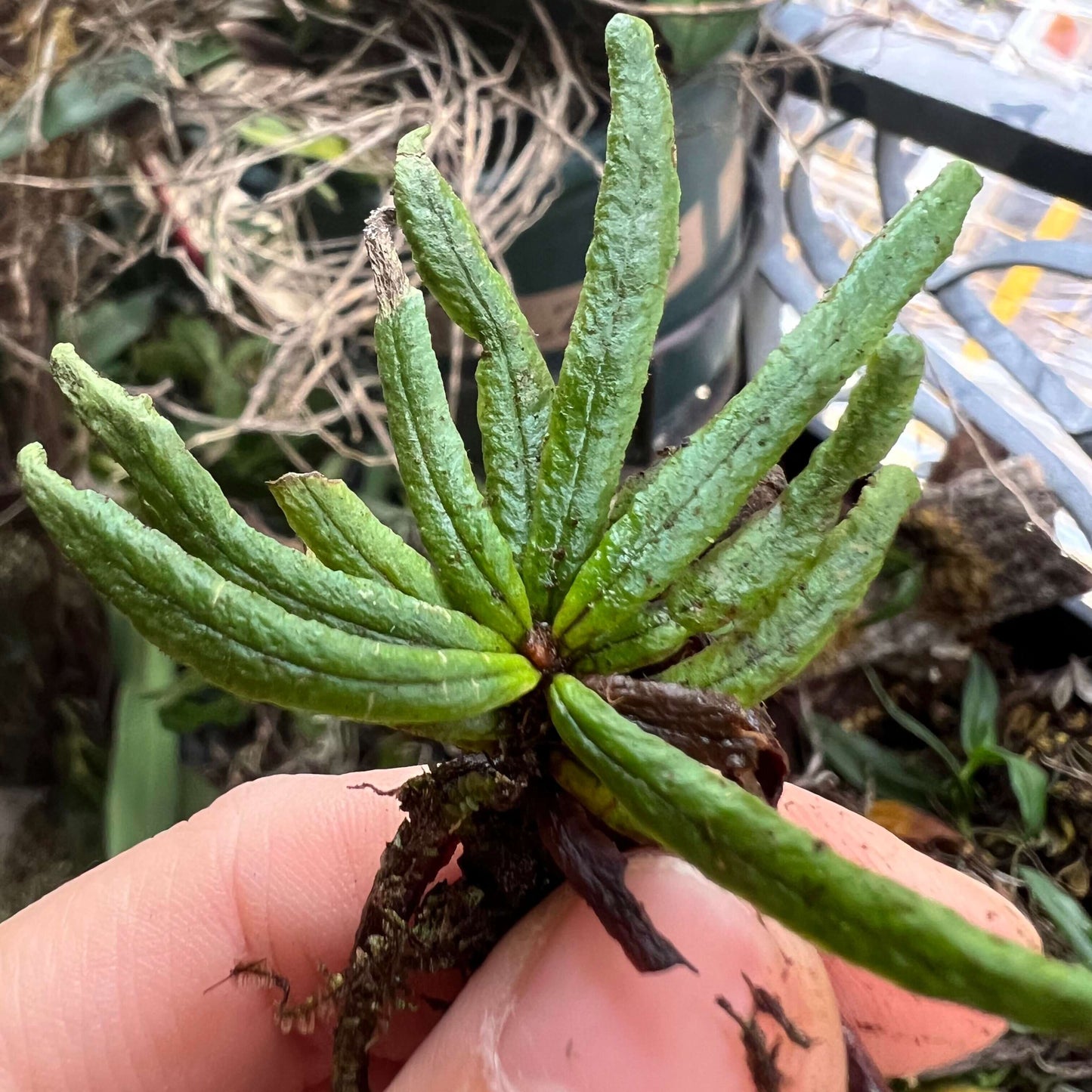
Scleroglossum sulcatum
Scleroglossum sulcatum
Couldn't load pickup availability
Scleroglossum sulcatum is a fern species in the family Polypodiaceae, widely distributed across tropical and subtropical regions of Asia and the Pacific, including Sri Lanka, southern China, Taiwan, Southeast Asia (Thailand, Vietnam, Peninsular Malaysia), parts of Indonesia (such as Sumatra, Borneo, Sulawesi, and the Moluccas), New Guinea, the Philippines, and numerous Pacific islands such as the Solomon Islands, Samoa, and the Caroline Islands. Ecologically, it typically grows epiphytically on tree trunks in dense, mossy, high-altitude forests.
Features:
-
The plant has a short sub-erect rhizome with a tuft of fronds. Scales on the rhizome are narrow, pale brown.
-
The fronds (laminae) are simple, linear, rather narrow (e.g. 0.2–3.5 mm in width, and up to ~10 cm or more in length under some conditions).
-
Sori (spore-producing structures) are located in submarginal grooves, opening toward the margin.
Care Tips:
-
Light
-
Provide bright but indirect light — avoid strong direct sunlight, especially midday.
-
East- or north-facing windows (or filtered light through curtains) tend to work best.
-
-
Temperature
-
Keep temperature above about 16 °C (≈ 60 °F).
-
Avoid cold drafts or extreme heat (e.g. from radiators).
-
-
Humidity & Air Moisture
-
Maintain relatively high humidity, ideally around 50–70% when grown indoors.
-
Use a humidifier, place the plant on a moist pebble tray, or group with other humidity-loving plants to help maintain humidity.
-
-
Substrate / Mounting Medium
-
Use a loose, well-draining, airy medium (like orchid bark, coarse bark chips, sphagnum moss) rather than dense potting soil — this mimics the natural epiphytic substrate.
-
If possible, mount on bark, wood, or cork — or simulate a tree-trunk environment rather than potting in heavy soil.
-
-
Watering
-
Water thoroughly but allow medium to dry slightly between waterings — do not let the roots sit waterlogged (to avoid rot).
-
Use rainwater or room-temperature water if possible (rather than overly hard or chlorinated water).
-
In dry indoor air, mist occasionally, but rely more on substrate moisture and humidity rather than over-misting.
-
-
Air Circulation
-
Ensure good air flow around the plant — avoid crowded, closed spaces. Good circulation helps reduce fungal issues and keeps roots healthy.
-
-
Fertilizing
-
During the growing season (spring to autumn), use a diluted balanced fertilizer occasionally (but lightly), rather than heavy fertilization.
-
-
General Maintenance & Monitoring
-
Watch out for overwatering (root rot) and underwatering or too-dry air (leaf browning / crisping) — adjust watering/humidity accordingly.
-
If using a mounting medium, periodically check that the roots are secure and not rotting; remount or refresh the medium if needed.
-
Share