Begin With Plants
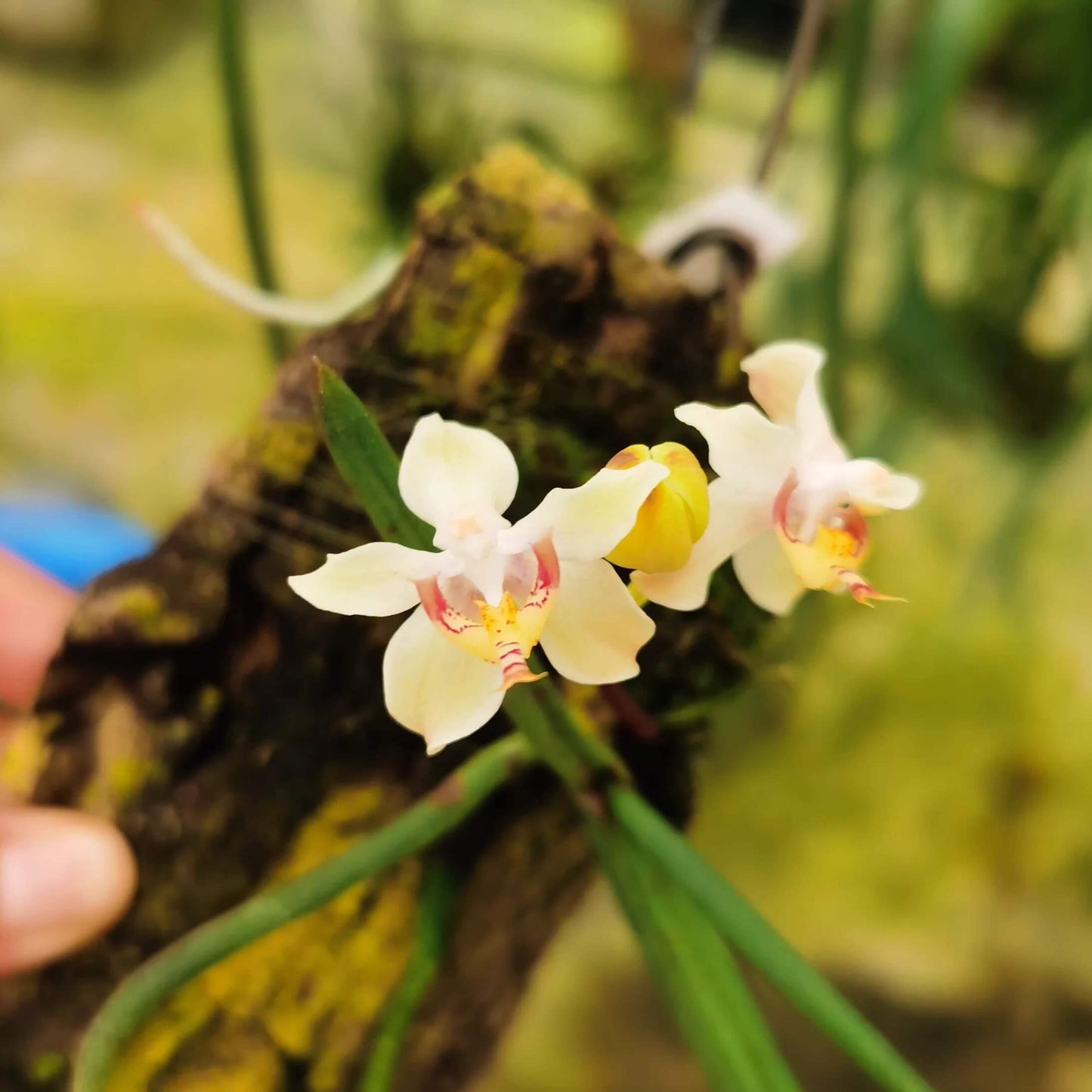
Snake Tongue Paraphalaenopsis (Paraphalaenopsis serpentilingua)
Snake Tongue Paraphalaenopsis (Paraphalaenopsis serpentilingua)
Couldn't load pickup availability
Snake Tongue Paraphalaenopsis (Paraphalaenopsis serpentilingua), named for its forked lip resembling a snake’s tongue, is a species of orchid in the genus Paraphalaenopsis. It is native to Borneo and belongs to a small group of terete‑leaved orchids within the Orchidaceae family, naturally growing in lowland forests and swampy areas below approximately 1000 m elevation.
Features:
-
Plant type: Warm‑growing epiphyte (grows on trees) and occasionally lithophyte (on rocks).
-
Growth habit: Pendulous (hanging) with thin cylindrical leaves.
-
Flowers: White petals and sepals with a contrasting yellow lip with red markings; fragrant.
Care Tips:
-
Light: Bright, indirect light; avoid harsh midday sun. Gentle morning or filtered light is ideal.
-
Temperature: Prefers warm conditions (18–28 °C). Protect from temperatures below 12 °C.
-
Humidity & Airflow: Thrives in high humidity (60–80%). Ensure good air circulation to prevent fungal issues.
-
Watering: Keep substrate evenly moist but not waterlogged. Allow the top layer to slightly dry between waterings. Reduce watering in cooler seasons.
-
Growing Medium: Use well-draining, airy media such as fine bark, pumice, or perlite. Slightly alkaline substrates mimic its natural limestone-origin habitat.
-
Potting & Display: Shallow or hanging pots recommended for pendulous growth. Ensure excellent drainage to protect roots.
-
Fertilization: Feed lightly during growing season with ¼–½ strength balanced fertilizer every 3–4 weeks. Avoid overfeeding.
-
General Notes: Stable conditions are key. Sudden changes in light, temperature, humidity, or watering may stress the plant. Mounted cultivation or open baskets often work best to mimic natural epiphytic habit.
Share